In the quiet rhythm of life, there exists a practice so subtle, so constant, that it often goes unnoticed—yet it holds the power to transform how we feel, think, and experience the world. Breathing, in its most conscious form, is not merely a biological function. It is an art. A return. A gentle pathway back to presence.
From the moment we enter this world, breath is our first companion. It arrives without instruction, without effort. And yet, somewhere along the way, in the midst of responsibilities, expectations, and the constant movement of modern life, we forget how to truly breathe. We inhale shallowly. We exhale hurriedly. We exist in a state of quiet disconnection from the very rhythm that sustains us. To breathe consciously is to remember.
THE LANGUAGE OF THE BODY
The body speaks in sensations, often long before the mind is aware. A tightening in the chest. A shallow breath. A subtle restlessness beneath the surface. These are not disruptions—they are messages.
When we breathe deeply and intentionally, we begin to notice patterns. How the breath shortens in moments of stress. How it pauses in uncertainty. How it becomes restricted when emotions are held rather than expressed.
By guiding the breath—lengthening the inhale, softening the exhale—we gently communicate safety to the body. The heart rate slows. Muscles release tension. The mind begins to follow.
This is not about control. It is about connection. The breath becomes a bridge—between body and mind, between tension and release, between disconnection and awareness.
In a world that celebrates speed, productivity, and constant stimulation, stillness can feel unfamiliar—even uncomfortable. Our minds are often several steps ahead, moving between past reflections and future anticipations. Rarely do we rest in the present moment, where life is actually unfolding.
Unlike thoughts, which tend to wander, or emotions, which rise and fall unpredictably, the breath is always here—steady, rhythmic, and available. By bringing awareness to each inhale and exhale, we begin to soften the noise of the mind. We create space. Not by force, but by attention.
A single conscious breath has the power to interrupt the cycle of distraction. A series of them can begin to reshape how we experience time itself.
Slowing the breath invites the body to soften. The shoulders drop. The jaw unclenches. The nervous system shifts from a state of alertness to one of ease. In this subtle transition, we are reminded that presence is not something we must chase—it is something we return to.
BREATHING AS A DAILY RITUAL
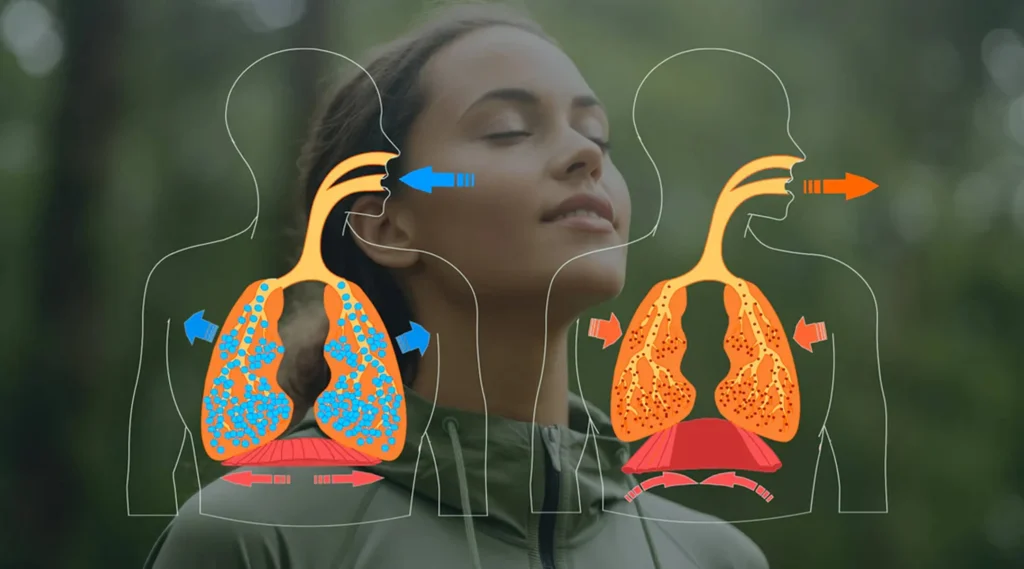
There is a quiet beauty in integrating conscious breathing into the rhythm of everyday life. It does not require a dedicated space, elaborate preparation, or extended time. It simply asks for attention. In the morning, before the world begins to move, a few slow breaths can set the tone for the day. Inhaling gently through the nose, allowing the breath to expand the chest and abdomen, then exhaling slowly—longer than the inhale—creates a sense of grounded clarity.
Throughout the day, moments of pause can be woven seamlessly into transitions. Before a meeting. After a conversation. While standing by a window, or sitting quietly between tasks. Each pause becomes an opportunity to return.
In the evening, conscious breathing offers a soft descent. As the body prepares for rest, lengthened exhales help release the accumulation of the day. The mind quiets. The body softens into stillness.
Over time, these small moments begin to shift something deeper. Breathing becomes not just a practice, but a way of being.
THE SUBTLE POWER OF SLOWNESS
There is a quiet beauty in integrating conscious breathing into the rhythm of everyday life. It does not require a dedicated space, elaborate preparation, or extended time. It simply asks for attention.
Throughout the day, moments of pause can be woven seamlessly into transitions. Before a meeting. After a conversation. While standing by a window, or sitting quietly between tasks. Each pause becomes an opportunity to return.
In the evening, conscious breathing offers a soft descent. As the body prepares for rest, lengthened exhales help release the accumulation of the day. The mind quiets. The body softens into stillness.
Over time, these small moments begin to shift something deeper. Breathing becomes not just a practice, but a way of being.
The body speaks in sensations, often long before the mind is aware. A tightening in the chest. A shallow breath. A subtle restlessness beneath the surface. These are not disruptions—they are messages.
When we breathe deeply and intentionally, we begin to notice patterns. How the breath shortens in moments of stress. How it pauses in uncertainty. How it becomes restricted when emotions are held rather than expressed.
By guiding the breath—lengthening the inhale, softening the exhale—we gently communicate safety to the body. The heart rate slows. Muscles release tension. The mind begins to follow. This is not about control. It is about connection. The breath becomes a bridge—between body and mind, between tension and release, between disconnection and awareness.BREATH AND EMOTIONAL BALANCE
In a world that celebrates speed, productivity, and constant stimulation, stillness can feel unfamiliar—even uncomfortable. Our minds are often several steps ahead, moving between past reflections and future anticipations. Rarely do we rest in the present moment, where life is actually unfolding.
Unlike thoughts, which tend to wander, or emotions, which rise and fall unpredictably, the breath is always here—steady, rhythmic, and available. By bringing awareness to each inhale and exhale, we begin to soften the noise of the mind. We create space. Not by force, but by attention.
A single conscious breath has the power to interrupt the cycle of distraction. A series of them can begin to reshape how we experience time itself. Slowing the breath invites the body to soften. The shoulders drop. The jaw unclenches. The nervous system shifts from a state of alertness to one of ease. In this subtle transition, we are reminded that presence is not something we must chase—it is something we return to.