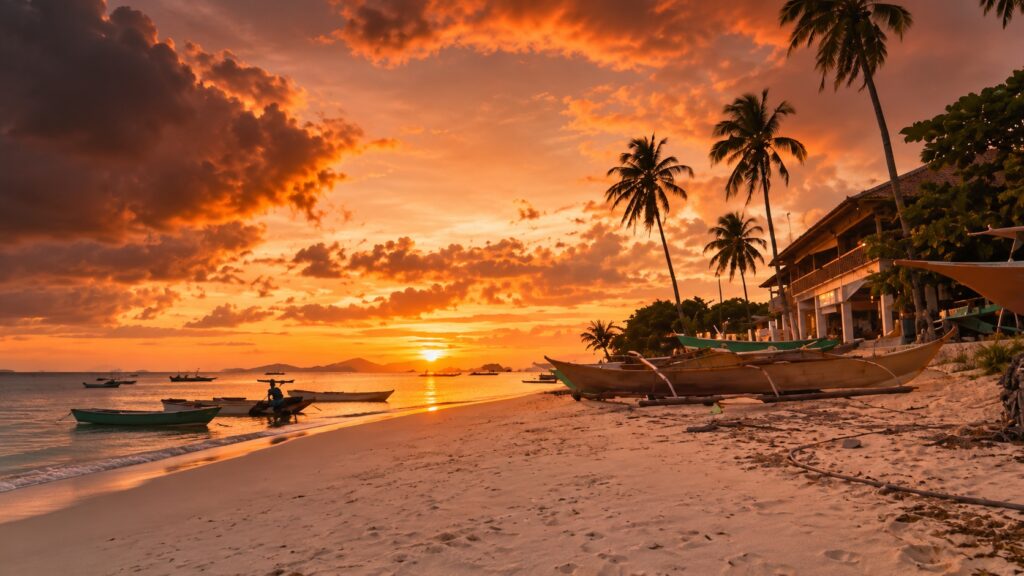
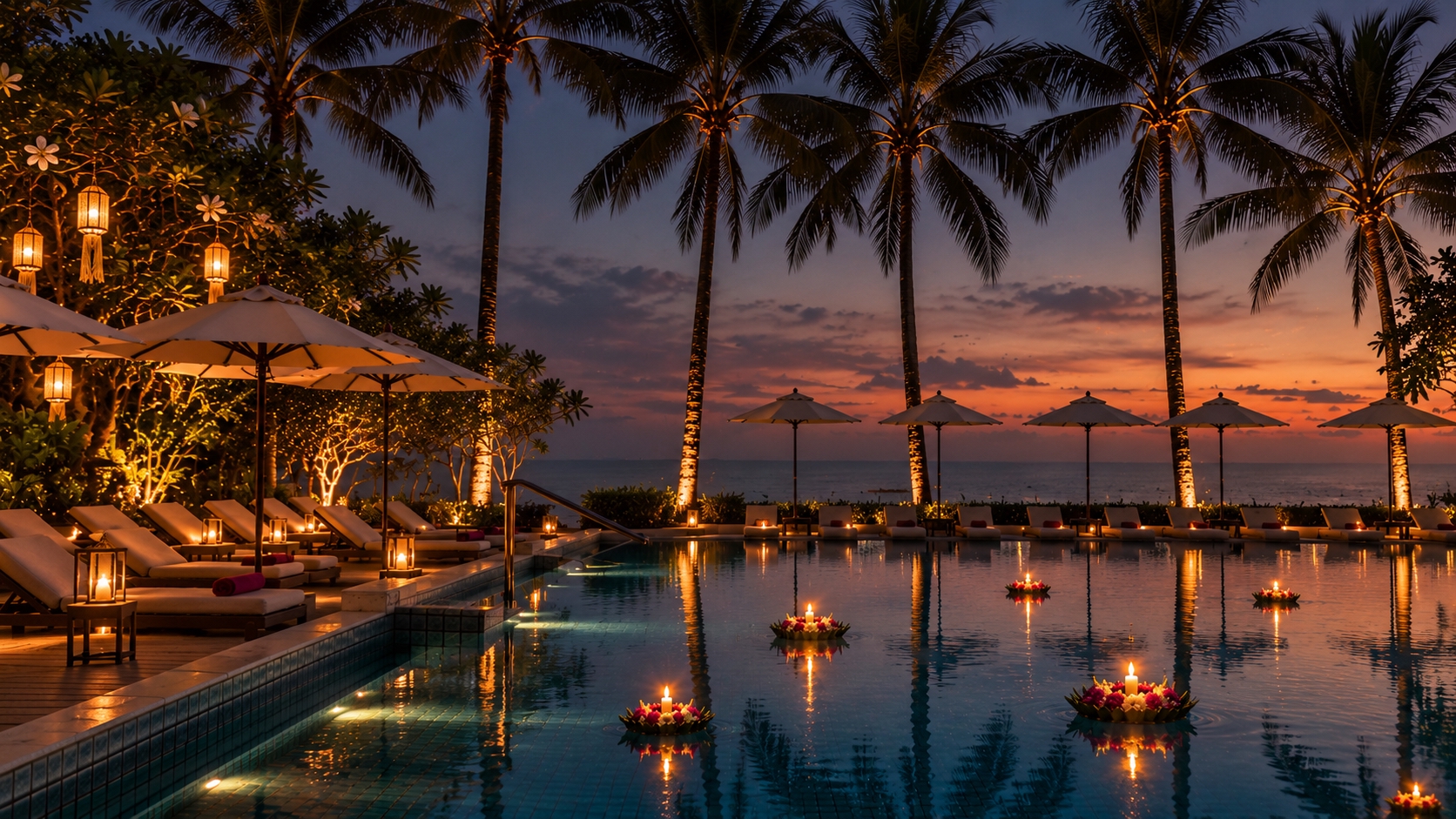
Once a year, as the full moon rises over the Gulf of Thailand, the island’s beaches, lakes and piers fill with small points of light. Families, couples and friends kneel at the water’s edge, light a candle and incense, and release a little floating offering into the dark. Within minutes, the sea is scattered with flickering flames drifting slowly towards the horizon.
This is Loy Krathong, one of Thailand’s most beautiful and best-loved festivals. Celebrating Loy Krathong in Koh Samui is a gentle, moving experience. It is also a reminder of something we often forget in the rush of the year’s final weeks: that gratitude and letting go belong together. As this article explores, the ritual offers a simple practice that anyone can carry home.
What Is Loy Krathong?
The name says it all. Loy means to float, and a krathong is a small vessel, traditionally made from a slice of banana tree trunk wrapped in folded banana leaves and decorated with flowers, a candle and incense sticks.
The festival is commonly traced back to the Sukhothai Kingdom, around 700 years ago. Legend credits Nang Noppamas, a royal consort, with crafting the first lotus-shaped krathong, although historians debate the details. What is certain is that Loy Krathong blends Buddhist and Brahmin influences with a much older connection between Thai communities and the water that sustains them.
At its heart, the festival honours Phra Mae Khongkha, the goddess of water. People float their krathongs to give thanks for the rivers, lakes and seas that nourish life, and to ask forgiveness for the ways we have used or polluted them. According to the Tourism Authority of Thailand, the act is also believed to release misfortune and invite good fortune for the year ahead.
When Is Loy Krathong 2026?
Loy Krathong follows the Thai lunar calendar and takes place on the evening of the full moon in the twelfth lunar month. The date shifts each year, usually falling in November. In 2026, Loy Krathong falls on Tuesday 24 November.
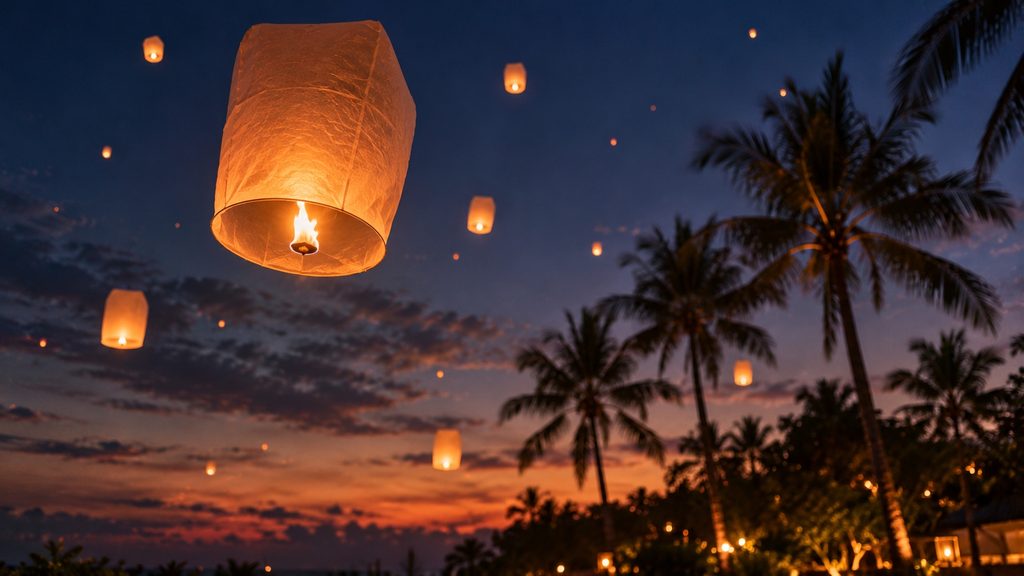
In northern Thailand, the festival coincides with Yi Peng, when lanterns are released into the night sky over Chiang Mai. In Koh Samui and across the south, the focus stays firmly on the water, with the sea taking centre stage.
Gratitude and Release: The Wellbeing Behind the Ritual
Many cultures mark the turning of the year with a moment of reflection. Loy Krathong does so with unusual grace. It brings together two practices that wellbeing traditions around the world recognise as quietly powerful.
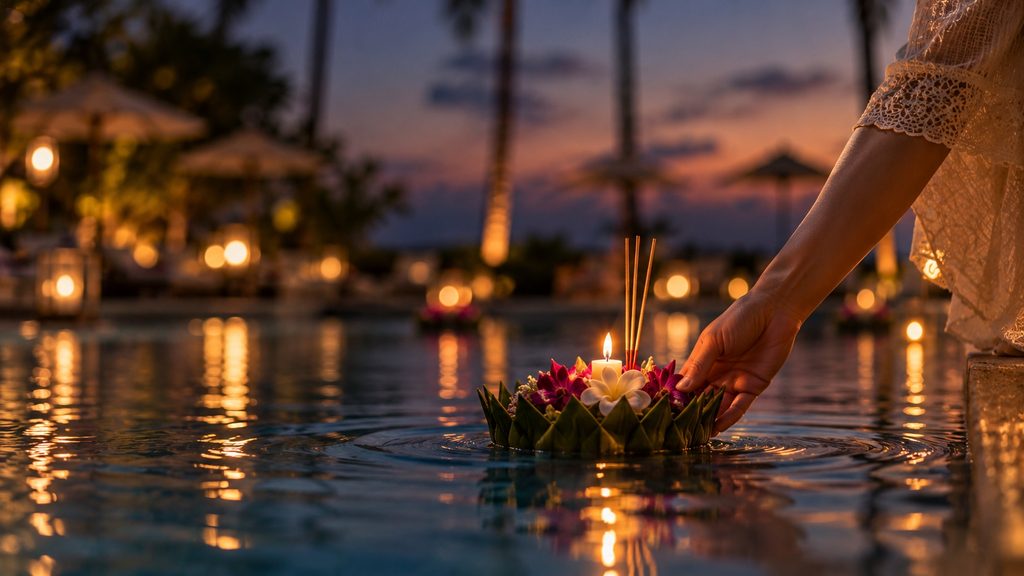
The first is gratitude. Thanking the water for all it provides is a way of noticing what we usually take for granted. A growing body of research, summarised by the Greater Good Science Centre at UC Berkeley, suggests that a regular gratitude practice may support better sleep and a more positive outlook.
The second is release. Traditionally, some people add a strand of hair or a fingernail clipping to their krathong, a symbol of letting go of anger, regret or bad luck. Watching it float away is a tangible way to close a chapter. Psychologists often describe a similar benefit in expressive writing, where putting worries into words helps the mind set them down.
A simple letting-go reflection
Before you float your krathong, or simply on a quiet evening at home, take ten minutes with a notebook and consider three questions:
- What am I grateful for this year? Name three people, places or moments, as specifically as you can.
- What am I ready to let go of? A habit, a worry or a grudge that no longer serves you.
- What would I like to welcome? One quality you would like more of in the months ahead, such as rest, patience, energy or joy.
As you release your krathong, hold the second answer lightly in mind and let it drift. Many people find the moment surprisingly emotional, and that is part of its power.
How to Make an Eco-Friendly Krathong
Thousands of krathongs are released each year, and their materials matter. Foam and plastic floats stay in the water long after the night is over, while natural materials break down or become food for fish. Making your own krathong is a lovely activity for families and couples, and it keeps the ritual true to its spirit of respect for water.
Share one krathong. Many Thai families now float a single krathong together, which reduces waste and makes the moment more meaningful.
Choose a natural base. A slice of banana trunk is traditional. Bread krathongs are also popular, as fish eat them once they drift away.
Fold banana leaves for the petals. Simple folded cones pinned around the base create the classic lotus shape.
Use pins sparingly. Bamboo skewers or toothpicks work better than metal pins or staples.
Decorate with flowers. Orchids, marigolds and jasmine are common choices, and many are sold fresh at local markets in the days before the festival.
Where to Celebrate Loy Krathong in Koh Samui
Every corner of the island marks the festival in its own way, from lively lakeside fairs to quiet stretches of sand.
Chaweng Lake is one of the island’s busiest gatherings, with food stalls selling coconut pancakes and grilled seafood alongside music and performances. Bophut Fisherman’s Village combines a festive market atmosphere with krathongs floated directly into the sea. Maenam, on the north coast, offers a more peaceful setting with wide views across the water.
Lamai Beach, on the east coast, is a favourite with those who prefer a slower pace. Local families gather along the shore at dusk, and the long curve of the bay fills with candlelight as the moon rises. It is also close to Hin Ta and Hin Yai, the famous grandfather and grandmother rocks, which makes for a gentle afternoon of exploring before the evening begins. Our Koh Samui travel guide explores more of Lamai’s slower side.
Tips for a mindful Loy Krathong
- Arrive at dusk. The light is beautiful, and you will find space at the water’s edge before the crowds.
- Prepare for rain. November is one of Samui’s wettest months, so a light umbrella or rain jacket is wise.
- Float with care. Light your candle away from clothing and hair, and release the krathong gently rather than throwing it.
- Leave other krathongs be. Each one carries someone’s wish, so let them drift undisturbed.
- Check local guidance on lanterns. Sky lanterns are restricted in many areas for fire and air safety, so ask your hotel or local authorities before releasing one.
Thai Wisdom, Lived in the Present
Loy Krathong reflects something deeply Thai: the belief that wellbeing is not separate from nature, community and gratitude, but woven through them. Water, in particular, holds a special place. It cleanses, restores and carries away what we no longer need.
This idea sits at the heart of Fivelements Samui, our forthcoming wellness retreat on the shores of Lamai Beach. Drawing on Thai healing traditions while staying grounded in modern life, its wellness philosophy treats water as a transformational practice, from the rhythm of the ocean to hot, warm and cold bathing rituals set in a tropical garden. It is a natural continuation of a journey that began in Bali, where our sister retreat explores the five elements of renewal beside the Ayung River.
Carrying the Light Forward
The candles of Loy Krathong burn for only a few minutes, but the intention behind them can last much longer. A moment of thanks, a conscious decision to let something go and a clear wish for what comes next are simple practices that work just as well at home as they do on a moonlit beach.
As the year draws to a close, Loy Krathong offers an invitation to pause, give thanks and begin the season ahead a little lighter. Wherever you find yourself on 24 November, we hope you will take a moment to let your own small light drift out across the water.