
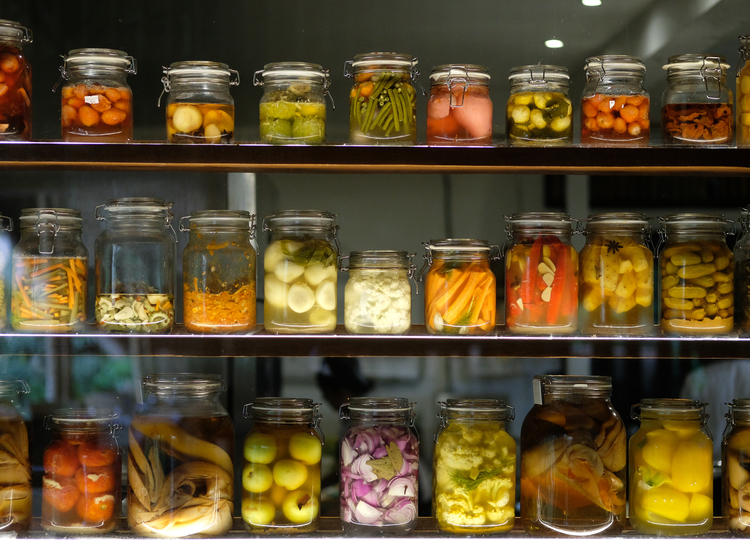
Fermented food feels quietly alive. It is not just preserved; it is transformed. What begins as a simple ingredient becomes something more complex, more potent, more deeply nourishing. Across cultures and centuries, fermentation has been used not only to extend the life of food but to enhance its relationship with the human body.
Today, as interest in gut health, probiotics and the microbiome continues to rise, fermentation is being rediscovered. What was once traditional knowledge is now supported by modern science, revealing that these living foods play a critical role in digestion, immunity and overall wellbeing. At its core, fermentation is one of the oldest forms of nourishment.
A Living Tradition Rooted in History
Long before refrigeration or industrial food systems, communities worldwide relied on fermentation as a natural method of preservation. In Korea, vegetables became kimchi. In Europe, cabbage transformed into sauerkraut. In Japan, soybeans evolved into miso. In tropical regions, people fermented fruits, roots, and herbs to enhance flavour and medicinal value.
These processes were guided by observation and the understanding that food, when allowed to interact with natural bacteria and yeasts, became easier to digest, more nutrient-dense, and more supportive of health. These cultures shared a simple principle: food is alive.
What Happens During Fermentation
Fermentation is a metabolic process in which microorganisms, primarily beneficial bacteria, break down sugars and starches in food. As this happens, several important transformations occur. Nutrients become more bioavailable, meaning the body can absorb them more easily. Natural enzymes are produced, supporting digestion. And most importantly, probiotic bacteria develop, contributing directly to the diversity of the gut microbiome.
These microbes are not foreign to the body; they are part of an ecosystem that lives within us, a complex network that influences digestion, immunity, metabolism and even mood. When we consume fermented foods, we are not just eating nutrients; we are introducing living organisms that interact with our internal environment.
The Microbiome: Where Fermentation Meets Science
In recent years, research into the gut microbiome has reshaped how we understand health. The digestive system is home to trillions of microorganisms that regulate essential functions from breaking down food to producing neurotransmitters such as serotonin. A diverse microbiome is associated with stronger immunity, reduced inflammation and greater resilience to stress.
Diet is one of the most powerful ways to influence this system. Fermented foods contribute by introducing beneficial bacteria and supporting microbial diversity. Studies have shown that regular consumption of fermented foods can increase microbiome richness and reduce markers of inflammation.
This is where ancient practice meets modern science. That’s also why fermentation has become central to many gut health and detox approaches, where restoring internal balance begins with what we consume.
Fermentation and Digestion
One of the most immediate benefits of fermented foods is their impact on digestion. Because fermentation partially breaks down food before consumption, it reduces the burden on the digestive system. This can make certain foods easier to tolerate, particularly for those with sensitive digestion.
Fermented vegetables, for example, retain their fibre while gaining probiotic benefits. Fermented beverages, such as kombucha, introduce organic acids that support digestive processes.
Over time, this contributes to a more balanced gut environment, where beneficial bacteria can thrive, and digestive efficiency improves. For many, this translates into reduced bloating, improved regularity and more stable energy levels.
Fermented Foods and Immunity
The connection between gut health and immunity is now widely recognised. A significant portion of the immune system resides in the gut, where it interacts directly with the microbiome. When this ecosystem is balanced, the body is better equipped to respond to external challenges.
Fermented foods support this balance by strengthening microbial diversity and enhancing the gut barrier – the lining that protects against harmful pathogens. In traditional systems, fermented foods were often used as preventative medicine. Today, research continues to validate their role in supporting immune function and reducing chronic inflammation.
A Return to Living Foods
In modern diets, many foods are highly processed, stripped of their natural enzymes and microbial life. While convenient, this often reduces the diversity of nutrients and beneficial compounds that support the body. Fermented foods offer a return to something more complete.
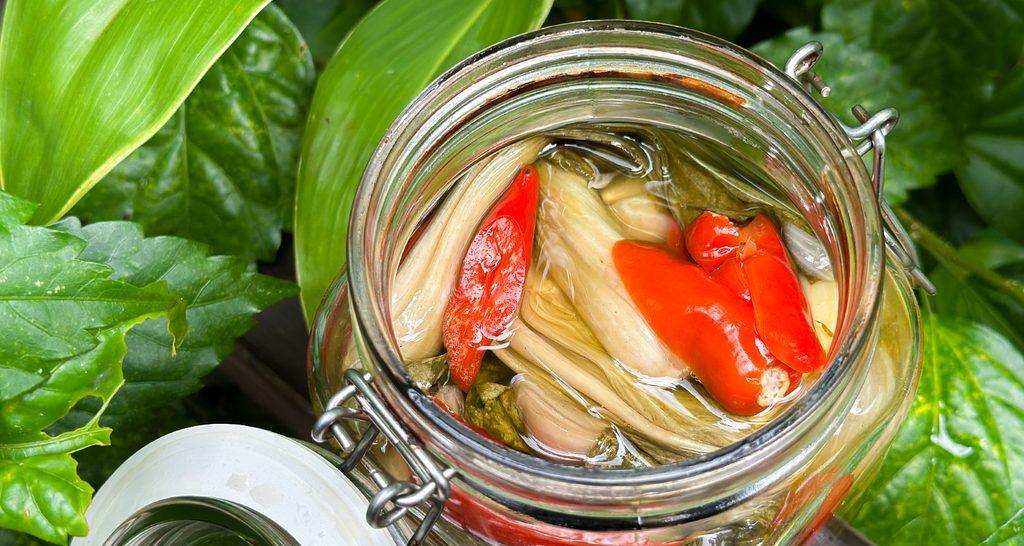
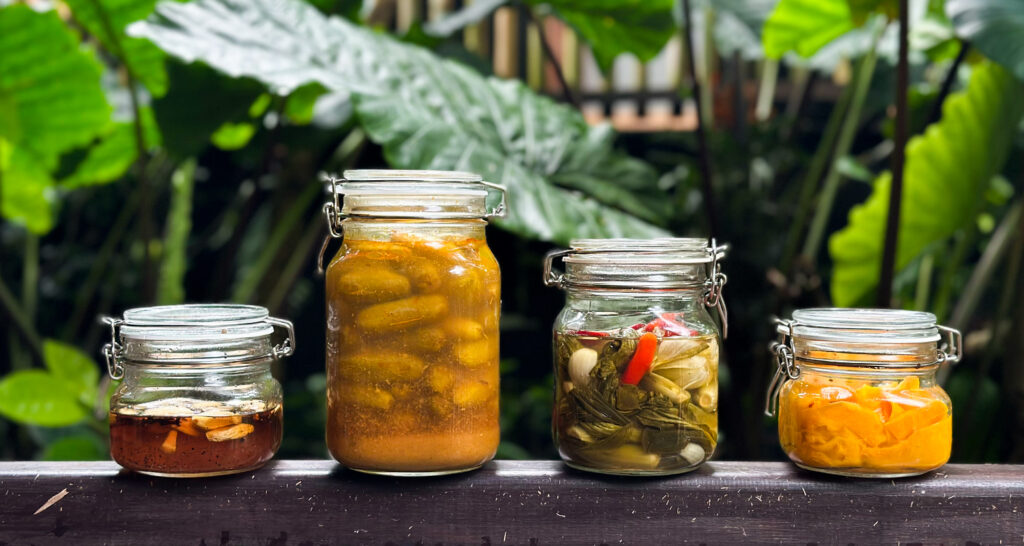
At Sakti Dining Room, this philosophy is expressed through a living relationship with ingredients. Vegetables and fruits sourced from the surrounding garden are transformed through natural fermentation into vibrant, probiotic-rich creations.
From green papaya kimchi to turmeric-infused krauts, from coconut probiotics to kombucha, each preparation reflects a balance between tradition and innovation. These foods are integrated into the dining experience as part of a broader approach to nourishment. A dedicated fermentation display brings this process into view, inviting guests to watch how food evolves over time and how simple ingredients become something more alive.
Fermentation as a Practice of Patience
Unlike fast food systems, fermentation cannot be rushed. It requires time, attention and the right conditions. In this sense, it mirrors the process of healing itself. Transformation does not happen instantly. It unfolds gradually, through small, consistent changes.
Something about this feels deeply grounding. To consume fermented food is to engage with a process that has already taken time, a reminder that not everything needs to be accelerated.
Supporting gut health does not require a drastic change. It often begins with small additions. A spoonful of fermented vegetables alongside a meal. A glass of kombucha in the afternoon. Gradually introducing probiotic-rich foods that complement the diet. Over time, these small shifts create cumulative effects. The body responds, digestion improves, energy stabilises and the internal environment begins to feel more balanced.
The Deeper Connection
Fermentation sits at the intersection of nature, science and tradition. It reflects a way of thinking about food not as isolated nutrients, but as part of a living system that interacts continuously with the body.
In a world that often prioritises speed and efficiency, it offers something different. A slower, more intentional approach to nourishment. A recognition that health is built not only through what we consume, but how it is prepared, how it is grown, and how it is integrated into daily life.
A Living Path to Wellbeing
As interest in gut health, detox and microbiome balance continues to grow, fermented foods are returning to their rightful place as a foundation.
They remind us that the body is not separate from nature, but an extension of it. That the processes happening within us mirror those happening outside us. And that sometimes, the most powerful forms of nourishment are the ones that are still alive.