FIVELEMENTS RETREAT BALI BECOMES FIVELEMENTS UBUD: A NEW CHAPTER IN OUR STORY
Some places become inseparable from their surroundings. Over time, their identity is shaped by the landscape, the people, the traditions and the experiences that unfold within them. For Fivelements, that place has always been Bali.
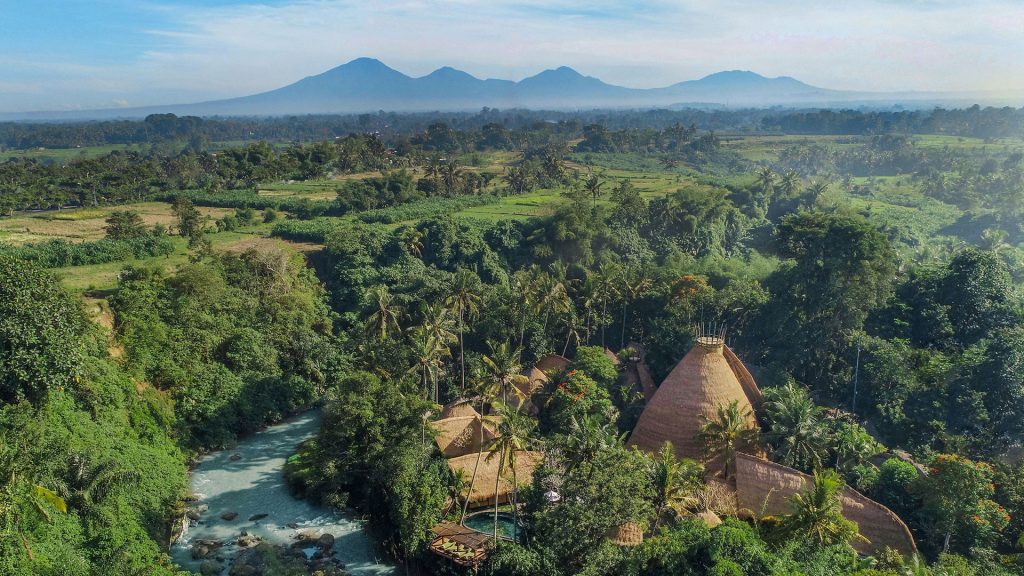
In 2007, a quiet sanctuary opened along the banks of the sacred Ayung River. Known for many years as Fivelements Retreat Bali, it grew from an intimate wellness retreat into an internationally recognised destination for Balinese healing, conscious living and transformational wellbeing. More than 95 industry awards and accolades followed, along with guests from around the world who came to experience a different rhythm of life.
Today, that story enters a new chapter
Fivelements Retreat Bali is now Fivelements Ubud
The new name places our original home more clearly within the destination that has shaped it from the beginning, while marking an important moment in Fivelements’ evolution. As the brand grows beyond Bali into a new generation of international wellness destinations, Ubud remains our original sanctuary of healing: where our philosophy first came to life and where many of the ideas that continue to guide Fivelements were formed.
For guests who have known us for many years, the name may be new. But the spirit of this place has been cultivated over nearly two decades.
Where the Fivelements Story Began
To understand Fivelements Ubud today, it helps to return to the river. The Ayung has been a constant presence since the retreat’s earliest days. You can hear it from suites and healing spaces, glimpse it through tropical gardens, and feel it in the cooler air along its banks. Water also holds profound significance within Balinese culture, where purification ceremonies remain part of a living spiritual tradition. Around this landscape, Fivelements gradually developed its own language of wellbeing.
Balinese healing practices and botanical preparations became part of an experience that considered physical, emotional and energetic wellbeing as interconnected. Yoga, meditation and sacred movement created opportunities for greater awareness. Fire and water ceremonies brought guests closer to traditions that remain woven into Balinese life. Plant-forward cuisine explored the relationship between nourishment and vitality, while bamboo architecture allowed buildings to converse with the surrounding landscape.
The philosophy drew on Tri Hita Karana, the Balinese principle of harmony between people, nature and the spiritual realm. It also drew from sekala and niskala, an understanding of the seen and unseen dimensions of life that continues to inform Balinese healing traditions. These ideas gave Fivelements Retreat Bali its distinctive character. They also created foundations that would eventually travel much further.
Why Fivelements Ubud?
Names carry meaning, particularly when a place has accumulated almost two decades of memories beneath one. The evolution from Fivelements Retreat Bali to Fivelements Ubud reflects a much larger evolution taking place within the brand.
Fivelements is entering a new era as a global wellbeing brand built around lifelong vitality, renewal and meaningful living. Its philosophy brings together five interconnected principles — Nature, Knowledge, Artistry, Innovation and Harmony — through an Elemental Compass that guides how destinations and experiences are conceived.
Within this expanding world, place matters.
Ubud represents our origins. It is where traditional Balinese wisdom, nature, healing, design and hospitality first came together to create the Fivelements experience. The destination name gives this original sanctuary a clearer identity as Fivelements grows internationally, while making its connection to Bali even more specific.
The change also reflects how we see Ubud itself. This is a destination with its own cultural, artistic and spiritual identity, surrounded by landscapes that have influenced generations of healers, craftspeople, artists and seekers. Our relationship with that environment has shaped the retreat since its beginning.
The name Fivelements Ubud allows us to honour that relationship more directly.
An Original Sanctuary, Continually Evolving
Returning guests will recognise much of what has made this place meaningful. The Ayung River still sets the retreat’s rhythm. Bamboo pavilions rise through tropical gardens. Balinese healing traditions remain central to the wellness experience. Sacred ceremonies continue to work with the symbolism and traditions of fire and water. Sakti Dining Room remains a place where food, nature and wellbeing meet. Yet a heritage property stays relevant through thoughtful evolution.
Fivelements Ubud today brings greater structure and personalisation to the wellbeing journey. Guests can arrive for a single healing experience, build their own stay around individual interests or follow a more immersive wellness programme over several days. The intention is to make wellbeing feel personal and applicable to life beyond the retreat.
Signature programmes now explore some of the most relevant dimensions of contemporary wellbeing. Panca Mahabhuta centres on restoring balance through the wisdom of the five elements. Tri Kaya Parisudha draws from Balinese principles of purification and mindful living. Sattva Yatra focuses on mental clarity and emotional balance, while Shakti Sadhana supports feminine wellbeing. Prema Sambandha creates space for human connection and conscious partnership.
Each follows its own path, while sharing a broader philosophy: wellbeing develops through the relationship between how we nourish ourselves, how we move, how we rest, how we connect and how consciously we live.
Balinese Healing in a Contemporary Wellness World
Wellness has changed considerably since Fivelements first opened in 2007. People today have greater access to information about nutrition, sleep, stress, mental wellbeing, healthy ageing and preventative health. They are also interested in approaches that recognise the interconnected nature of wellbeing. Fivelements Ubud is evolving within this conversation while remaining grounded in the traditions of its home.
The Healing & Wellness Villagebrings together private treatment spaces, botanical preparations, movement, water healing and ceremonial practice. Traditional Balinese massage and healing sit alongside acupuncture, physiotherapy and other integrative approaches. Yoga, meditation, breathwork, Qigong and sound practices invite guests to explore movement and awareness in different ways.
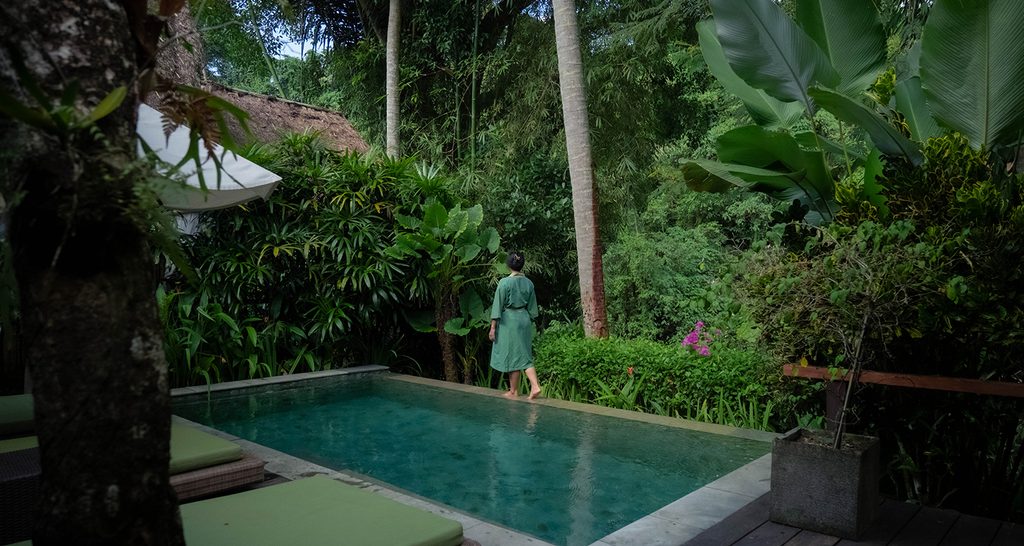
Water has become an increasingly important expression of this philosophy. Alongside the flowing Ayung River, a dedicated water healing pool supports Watsu-inspired aquatic bodywork, using buoyancy and gentle practitioner-guided movement to create conditions for physical relaxation and release.
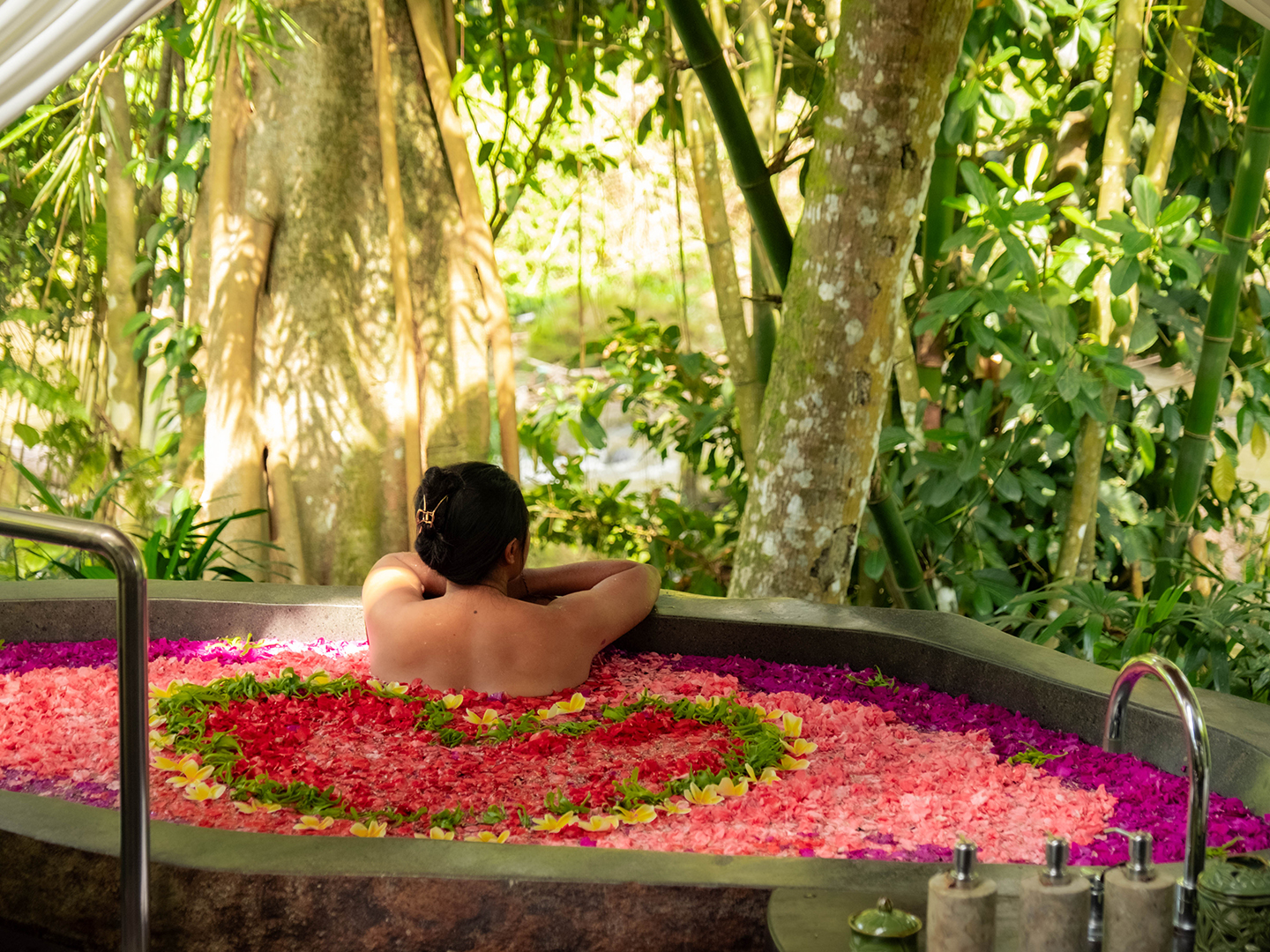
Our botanical traditions continue to evolve. Within the Healing Laboratory, fresh herbs and plants, including botanicals cultivated in our medicinal gardens, are transformed into oils, masks, scrubs and preparations used within treatments and rituals. Traditional knowledge therefore remains something guests can experience through touch, scent, texture and the plants growing around them.
This meeting of inherited wisdom and contemporary knowledge is becoming increasingly important to the future of Fivelements. Tradition gives us roots; curiosity lets those roots keep growing.
Cuisine for Life
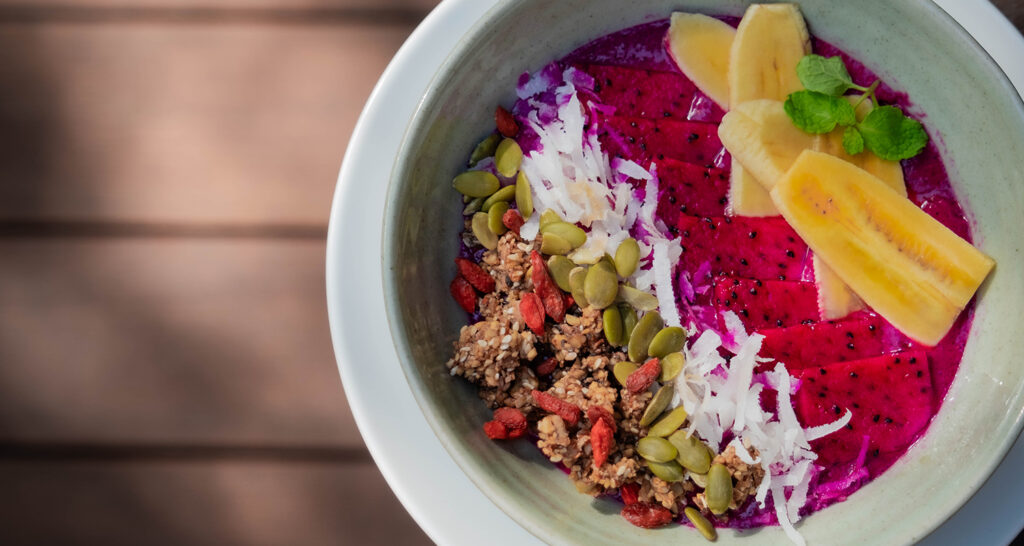
Food has been part of the Fivelements philosophy from the beginning, and its role continues to expand. At Sakti Dining Room, overlooking lotus ponds beside the river, plant-forward cuisine celebrates fresh produce, herbs, living foods and nourishing cooked dishes. Many ingredients come directly from the gardens at Fivelements Ubud, while organic eggs and sustainably sourced fish add flexibility to a predominantly plant-forward approach.
The experience extends beyond individual dishes. Bamboo dining explores traditional cooking methods and Indonesian flavours. The Chef’s Tasting Menu gives the culinary team a more expressive way to present Fivelements cuisine. Herbs grown within the retreat appear in teas and wellness preparations, creating connections between garden, kitchen and guest experience. This is the idea behind Cuisine for Life: food as a daily expression of wellbeing, culture, pleasure and connection to place.
A Deeper Relationship With Nature
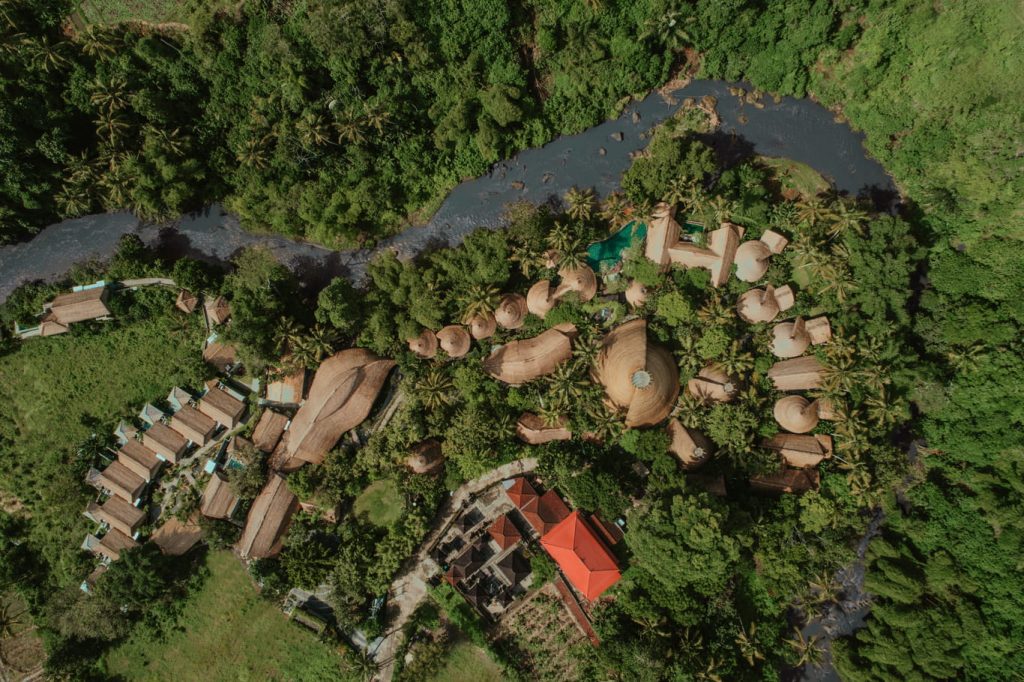
The evolution of Fivelements also brings renewed attention to something that has always surrounded us: nature. Fivelements Ubud was designed to feel part of its landscape. Bamboo, alang-alang thatch, timber, and open-air architecture allow light, air, and vegetation to move through the retreat, while pathways follow the contours of tropical gardens toward the river.
Today, that relationship extends through nature-based experiences, botanical rituals, garden ingredients and spaces created for contemplation and movement. It also shapes how we think about regenerative hospitality. A wellness destination has a responsibility to consider the health of the environment and communities around it because human wellbeing exists within a much larger ecosystem.
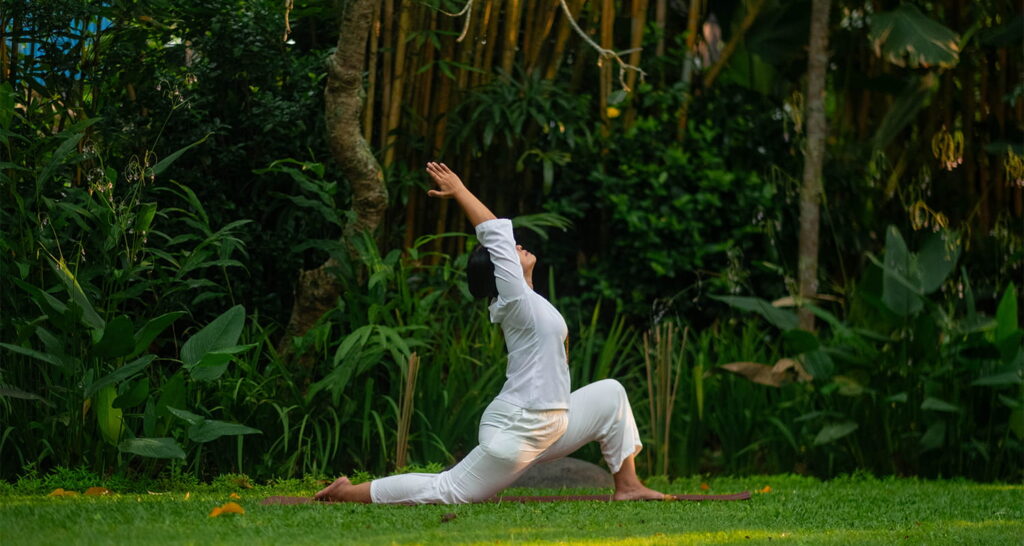
For guests, the experience can be remarkably simple. It may begin with waking to the sound of the river, walking barefoot through the gardens, practising yoga beneath a bamboo roof or sitting quietly after tropical rain. Wellbeing often becomes tangible through these small encounters.
From Ubud to a Wider Fivelements World
Perhaps the most significant meaning behind the new identity lies beyond the boundaries of the retreat itself. What began beside the Ayung River is becoming part of a wider Fivelements world.
The new global brand is built around an integrative approach to wellbeing designed for lifelong vitality. Fivelements Ubud now stands within that vision as its original expression: a place shaped by ancient wisdom, nature and deeply personal journeys of renewal.
As new Fivelements destinations emerge, each will develop its own relationship with landscape, culture and community. The intention is to create places with distinct identities while connecting them through a shared philosophy of wellbeing. This makes Ubud’s role particularly meaningful. It carries the memory of where everything began.
The river, the healers, the ceremonies, the bamboo structures, the gardens, the cuisine and the people who have cared for generations of guests have all contributed to the evolution of Fivelements. The lessons learned here continue to influence how the brand thinks about healing, hospitality and the role wellbeing can play throughout a lifetime.
The Next Chapter Begins in Ubud
A name can signal change, but it can also bring a story into sharper focus. For nearly two decades, guests knew this sanctuary as Fivelements Retreat Bali. Many arrived looking for rest, healing or perspective and left carrying memories of experiences that were uniquely connected to this corner of Bali.
Today, Fivelements Ubud carries that heritage forward. The new identity gives our original home its place within a growing international family while celebrating the destination that shaped us. It creates space for new wellness programmes, deeper personalisation, evolving healing experiences and a broader understanding of wellbeing that can accompany guests throughout life.
And at the centre of it all, the Ayung River continues to flow. For returning guests, Fivelements Ubud offers the opportunity to rediscover a place that has continued to grow alongside them. For those meeting us for the first time, it is an invitation to discover where the Fivelements story began and experience the traditions, nature and philosophy that continue to guide where we are going next.
Welcome to Fivelements Ubud. The original sanctuary of healing and the beginning of a new chapter.
THE MIDLIFE RESET: A NEW APPROACH TO PERIMENOPAUSE, MENOPAUSE AND WOMEN’S WELLBEING
At some point in many women’s lives, familiar rhythms begin to change. Sleep may become lighter, energy less predictable, concentration occasionally elusive. A menstrual cycle that once arrived with reassuring regularity may begin to shift. The body may respond differently to food, exercise or stress, while emotions can feel closer to the surface. For some women, the changes are subtle; for others, they profoundly affect daily life.
This transition is part of the global conversation around women’s health, perimenopause, menopause and midlife wellness. For generations, women often entered this stage with limited information about what was happening within their bodies. Today, science is offering a more sophisticated understanding of menopause as a significant physiological transition deserving informed, individualised care.
The World Health Organisation describes menopause as a natural stage of life, usually occurring between the ages of 45 and 55, while perimenopause can begin several years earlier. Experiences vary enormously. Hot flushes and night sweats are widely recognised, but changes in sleep, mood, cognition, and physical comfort can also be part of the transition. After menopause, changes in oestrogen also affect longer-term bone and cardiovascular health.
Understanding these changes creates an opportunity to approach midlife with greater awareness. It can become a time to listen more carefully to the body, reassess the foundations of wellbeing and establish practices that support vitality for the decades ahead
Understanding What Happens During Perimenopause
Perimenopause is the transitional period leading to menopause, when ovarian function and the production of hormones including oestrogen and progesterone begin to change. Menopause itself is reached after 12 consecutive months without menstruation, while the years that follow are known as postmenopause.
The process is highly individual. Some women experience relatively few changes, while others encounter symptoms that evolve over several years. The National Institute on Ageing notes that menopausal symptoms may last between two and eight years, with considerable differences between women.
This variability is important because there is no universal experience of menopause.
Hormones interact with almost every system in the body, which helps explain why the transition can be experienced in such diverse ways. Oestrogen, for example, has roles beyond reproduction, including bone metabolism, cardiovascular health, temperature regulation and brain function.
In 2026, the World Health Organisation dedicated part of its menopause education series specifically to the effects of menopause on cognition and mental health, including brain fog, mood changes and brain health after menopause. This reflects an important evolution in women’s health: symptoms once discussed separately are now understood within the broader physiological context of the menopausal transition.
For women themselves, knowledge can be remarkably empowering. Understanding why sleep, concentration, energy or emotional patterns may be changing allows the experience to be approached with curiosity and appropriate support.
Sleep, Stress and the Midlife Brain
Sleep deserves particular attention during perimenopause and menopause because its effects extend throughout the entire body.
Hormonal changes can influence sleep directly, while hot flushes and night sweats may create additional disruption. Persistent sleep loss can then affect memory, energy and concentration, creating a cycle in which several seemingly separate symptoms reinforce one another. Protecting sleep therefore becomes an important part of menopause wellness.
Regular sleep and waking times, exposure to natural morning light, daily physical activity, restorative evening routines and creating a cool, quiet sleeping environment can all help establish stronger circadian cues. Relaxation practices such as meditation may also be useful for some women, particularly when mental activity or stress makes it difficult to settle at night.
This is also a stage of life when stress deserves greater consideration. Midlife can coincide with substantial professional responsibility, caring for children or ageing parents, changing relationships and a growing awareness of one’s own long-term health.
Creating space for restoration is therefore more than an indulgence. It allows women to notice how they feel, identify patterns and respond thoughtfully to changing needs.
Nourishment for Hormonal Health and Healthy Ageing
Nutrition becomes particularly meaningful during the menopausal transition because the body’s metabolic landscape is changing. The National Institute on Ageing notes that during menopause the body may begin using energy differently, while changes can occur in body composition, fat distribution, bone density and cardiovascular health.
A plant-forward diet provides an excellent foundation for midlife nutrition. Vegetables, fruits, legumes, nuts, seeds, whole grains, herbs and other plant foods provide fibre and a broad range of micronutrients and phytochemicals while supporting gut microbiome diversity.
Protein also becomes increasingly important as women age because maintaining muscle supports strength, metabolic health, mobility and healthy ageing. Plant proteins can sit alongside other consciously chosen protein sources, depending on individual preferences and nutritional needs.
Bone health deserves equal consideration. Calcium, vitamin D, protein, and weight-bearing movement all contribute to maintaining skeletal strength, particularly as declining oestrogen can accelerate bone density loss after menopause.
At Fivelements Ubud, this understanding resonates naturally with the philosophy of plant-forward wellness cuisine at Sakti Dining Room. Fresh vegetables, herbs, and ingredients drawn from our own garden, fermented foods, nourishing teas and thoughtfully prepared dishes create an approach to eating centred on diversity, pleasure and nourishment. Eggs and fish provide supplementary animal protein within a predominantly plant-based culinary philosophy. The intention is beautifully simple: to give the body the quality of nourishment it needs to thrive.
Movement, Strength and the Body in Transition
Physical activity is another powerful foundation of healthy ageing for women. Midlife movement can encompass several complementary forms. Resistance and weight-bearing exercise help preserve muscle and bone. Cardiovascular activity supports heart and metabolic health. Yoga, mobility work and mindful movement contribute to flexibility, balance and body awareness.
The value extends into mental wellbeing as well. Movement can support mood, sleep and stress regulation, making it one of the most versatile tools available during this transition. The key is creating a relationship with movement that can be sustained.
At some stages, the body may welcome greater intensity. At others, restoration, stretching, yoga or walking may feel more appropriate. Developing the ability to recognise those signals can itself become a form of wellbeing practice.
Research into complementary approaches also suggests that yoga can be useful during menopause, with evidence indicating it may offer benefits comparable to other forms of exercise for some symptoms. Mindfulness research remains developing, although early findings are promising. For many women, this stage becomes an opportunity to deepen the relationship with their bodies through greater attention and awareness.
Personalised Wellness Matters
Perhaps the most important lesson emerging from contemporary menopause research is that individual experience matters. The same transition can look remarkably different from one woman to another. Genetics, lifestyle, health history, environment and personal circumstances all contribute to how menopause is experienced.
This is why personalised care is so important. Lifestyle practices can provide a strong foundation for wellbeing, while women experiencing disruptive symptoms may also benefit from discussing evidence-based medical options with a qualified healthcare professional. Hormonal and non-hormonal treatments are available, and treatment decisions should take into account symptoms, medical history, individual risk and personal preference. The distinction matters particularly within wellness. Nutrition, movement, sleep, stress management and restorative practices can complement appropriate healthcare while supporting the broader conditions in which the body functions well. This more integrated understanding allows women to build a personal ecosystem of support rather than searching for a universal solution.
Midlife as a Foundation for Future Vitality
One of the most compelling ways to understand perimenopause is as a window into future health. Changes in hormones intersect with cardiovascular health, bone density, muscle mass, metabolic health, sleep and emotional wellbeing. The habits cultivated during these years can therefore carry significance far beyond the transition itself.
Recent research has described perimenopause as a potential “window of opportunity” for lifestyle medicine because this stage brings together biological change with an important moment for reassessing health behaviours. There is something powerful in this perspective. Midlife can become a period of renewed attention to strength, nourishment, sleep, emotional balance, meaningful relationships and personal purpose. The body is evolving, and wellness can evolve with it.
For some women, this may mean prioritising resistance training for the first time. For others, it may mean improving sleep, reconsidering nutrition, creating space for meditation or spending more time in nature. Often, the most meaningful approach brings several of these elements together.
A Space for Feminine Renewal at Fivelements Ubud
Bali has long held a particular resonance for people seeking periods of reflection and renewal. Its relationship with nature, ritual and community creates an environment in which wellbeing is experienced as something woven into everyday life.
Within the riverside sanctuary of Fivelements Ubud, this philosophy provides a natural setting for women moving through periods of personal and physiological transition. Time in nature, Balinese-inspired healing rituals, mindful movement, yoga, meditation and plant-forward nourishment can create space to reconnect with the body and consider what it needs for the next chapter of life.
This philosophy also informs Shakti Sadhana – Feminine Reawakening, Fivelements’ dedicated women’s wellness programme. The programme brings together healing, emotional alignment, mindful movement, nourishment and feminine spiritual practices within an experience designed to honour the evolving needs and wisdom of womanhood.
The deeper purpose extends beyond any single stage or symptom. It is an invitation to cultivate a more attentive relationship with wellbeing and to recognise that women’s health continues to evolve throughout life.
Perimenopause and menopause are significant transitions within that longer journey. With knowledge, appropriate support and conscious attention to the foundations of health, these years can provide fertile ground for understanding the body more deeply and investing in the vitality that will support the decades ahead.
Midlife carries its own intelligence. Listening to it can be the beginning of a richer and more informed relationship with health.
WHY REST IS THE FOUNDATION OF TRUE WELLBEING
By the time July arrives, many people begin to feel it. Not always in obvious ways. Sometimes it appears as thinning of energy, a reduced ability to focus, or a sense that the body is moving through the day while the mind struggles to stay present. The year, which may have begun with clarity and momentum, has gathered speed; work has accumulated, responsibilities have deepened. The demands of life, visible and invisible, have layered themselves over time.
And somewhere in that movement, the body begins to ask for something simple, yet often overlooked – rest. Not the kind of rest that fills a free evening or a delayed weekend but deeper restoration. The kind that recalibrates the nervous system, restores mental clarity and replenishes the body at a cellular level.
This is one of the paradoxes of modern life: we have become highly skilled at sustaining activity, yet far less practised at sustaining recovery. And yet science continues to confirm what traditional healing systems have understood for centuries: wellbeing is not built solely through what we do, but through how well we restore.
July, positioned at the midpoint of the year and within the heart of the global travel season, offers a powerful invitation to reconsider rest not as interruption, but as a vital part of human vitality.
The Body Is Built on Rhythm
Human biology is cyclical by nature. Every major system in the body operates through rhythm. The heart contracts and expands. The lungs inhale and exhale. Hormones rise and fall. Sleep cycles move through predictable stages. Even digestion follows circadian timing. Health depends on rhythm.
In natural environments, these rhythms are constantly reinforced. Light changes, seasons shift, temperatures fluctuate, and ecosystems move through cycles of growth and stillness. Human beings evolved within this framework. Yet modern life often compresses these rhythms into prolonged activity.
Long workdays, irregular sleep, constant digital stimulation, and fragmented attention create an environment in which output remains high, but recovery becomes inconsistent. Over time, this imbalance affects everything. Energy becomes less stable, focus becomes harder to maintain, sleep quality declines and emotional resilience weakens. It is biology asking for balance. Restoration is how rhythm is restored.Lorem ipsum dolor sit amet, consectetur adipiscing elit. Sed do eiusmod tempor incididunt ut labore et dolore magna aliqua.
Recovery Is a Biological Process
One of the most misunderstood aspects of rest is that it is often perceived as passive. Biologically, it is anything but passive.
During periods of genuine rest, the body shifts into parasympathetic dominance, activating processes essential for repair and regulation. In this state, digestion becomes more efficient, inflammation begins to reduce, muscles recover, immune cells become more active, and the brain consolidates memory and learning.
Research from the fields of neuroscience and psychoneuroimmunology continues to show that recovery directly affects:
cognitive performance
emotional regulation
metabolic stability
immune resilience
hormonal balance
longevity markers
This means that rest is not simply about feeling better; it changes how the body functions. The quality of recovery influences the quality of life.
Mental Fatigue and the Cost of Constant Attention
Modern exhaustion is not always physical. For many people, the greatest burden is cognitive. We live in a world of endless information, constant communication and persistent low-level urgency. Notifications, deadlines, social obligations and digital environments keep the mind in a near-continuous state of engagement.
This creates what psychologists describe as cognitive overload. Research shows that the brain has limited attentional capacity. When that capacity is repeatedly stretched without recovery, concentration weakens, memory becomes less efficient and emotional tolerance narrows.
This is why even highly capable individuals can begin to feel mentally scattered despite functioning outwardly. The solution is not always greater discipline; rather, it is about less input. Periods of stillness, reduced stimulation and intentional space allow the mind to reorganise. Mental clarity returns because it is given room to emerge.
This is one reason why searches for mental clarity retreats, stress recovery retreats and wellness retreats in Bali continue to rise globally. Increasingly, people are recognising that clarity requires conditions.
The Nervous System and the Role of Safety
At the centre of recovery is the nervous system. The autonomic nervous system regulates how the body responds to the world, moving between activation and restoration. In healthy rhythm, these states alternate naturally. When life becomes prolonged in intensity, however, the system can remain biased toward activation.
This does not always feel dramatic; often it feels like subtle tension, restlessness, difficulty switching off, light sleep, shallow breathing and constant mental movement. From a physiological perspective, the body may no longer feel fully safe enough to soften.
This is why true recovery often depends on creating environments of safety in the body, your environment and in rhythm. This is where healing modalities such as therapeutic bodywork become especially valuable.
Touch-based therapies have been shown to reduce cortisol, increase oxytocin and support parasympathetic regulation. This is one reason why bodywork can feel deeply restorative beyond muscular relief. At Fivelements Ubud, this principle sits at the centre of many healing pathways. Treatments are designed to support the body’s natural return to regulation.
Breathwork and the Intelligence of the Vagus Nerve
Breath is one of the most immediate tools for recovery. Unlike many bodily systems, breath is automatic and voluntary. This makes it a direct bridge between conscious intention and autonomic regulation.
Slow, controlled breathing stimulates the vagus nerve, a central component of the parasympathetic system. Higher vagal tone has been associated with improved emotional resilience, reduced inflammation, stronger digestion and greater adaptability under stress.
Scientific studies on breathwork show improvements in heart rate variability, reduced anxiety and enhanced nervous system flexibility. This matters because resilience is not about avoiding challenge but rather about recovering well. And breath restores that flexibility. Within traditional healing systems, breath has long been understood as life force. Modern science is simply offering a deeper explanation of why.
Nature as a Regenerative Environment
There are places where the body rests more easily and nature is one of them. Research into forest bathing and environmental medicine has shown that time spent in natural settings reduces cortisol levels, lowers blood pressure and improves immune function. Exposure to phytoncides released by trees has been linked to increased natural killer cell activity, strengthening the body’s defence systems.
But beyond measurable biology, nature restores through rhythm, such as the movement of water, the stillness of trees or the absence of artificial urgency. These are not small influences; they actually affect how the nervous system perceives the world.
This is one of the reasons Bali continues to hold such strong appeal for wellness seekers. Its landscapes naturally support decompression. Rivers, jungle, ocean air and sacred spaces create environments where the body remembers how to soften. At Fivelements Ubud, the retreat’s riverside setting becomes part of the healing itself. The environment is therapeutic.
Nourishment and Sustainable Energy
Recovery is shaped by what we consume. Not only mentally, but physically. The body restores best when nourished with foods that support regulation. Research consistently links plant-rich diets to lower inflammation, greater microbiome diversity and more stable metabolic health.
This matters because the gut influences far more than digestion alone. The gut microbiome affects neurotransmitter production, immune function and mood regulation. A balanced internal ecosystem contributes directly to clarity and energy.
At Sakti Dining Room, Fivelements’ cuisine reflects this philosophy through plant-forward meals, fermented foods, healing herbs, herbal teas and fresh ingredients from our own garden. Food becomes part of the restoration process.
The Wisdom of Ritual
Recovery rarely happens by accident; it is cultivated through rhythm and ritual. Small steps include morning tea, slow movement, evening reflection, time away from devices and intentional silence. These practices may seem simple, yet research shows routine reduces mental fatigue and improves emotional stability by creating predictability and coherence.
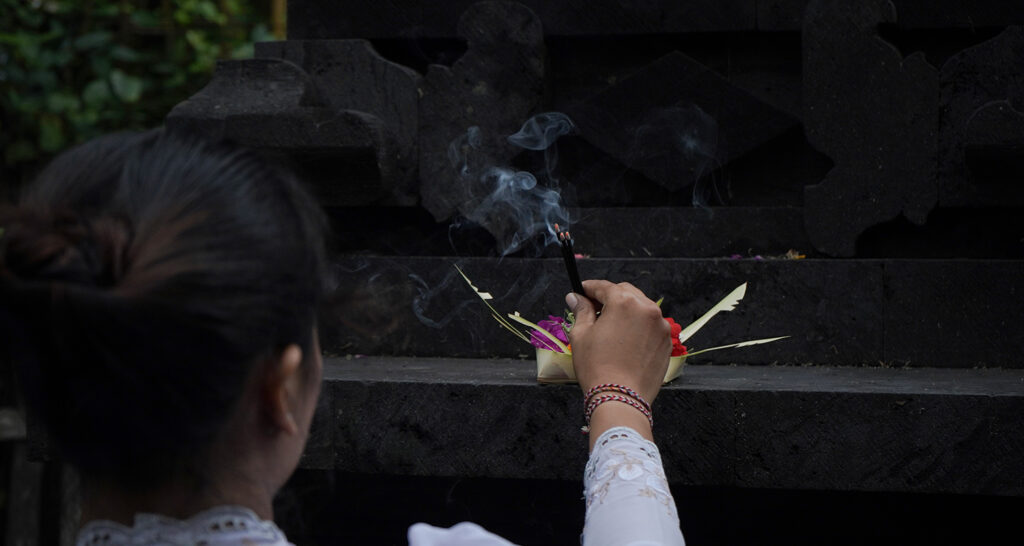
Traditional healing systems have long understood this. Ritual creates structure for restoration. At Fivelements Ubud, sacred ceremonies, healing rituals and daily practices are integrated as pathways into presence. This is where healing deepens through consistency.
Sustainable Wellbeing Begins with Restoration
The most resilient people are not those who push endlessly. They are often the ones who understand rhythm best. They know when to move, when to pause, when to nourish and when to soften. They understand that longevity is built not through constant expenditure of energy, but through wise stewardship of it. This is what sustainable wellbeing means: a life built on coherence.
At Fivelements Retreat Bali, programmes such as Panca Mahabhuta reflect this understanding, weaving together therapeutic healing, mindful movement, restorative bodywork, conscious nourishment and nature immersion to support a deeper return to balance.
Rest is one of the most intelligent ways we strengthen our capacity to live well. And perhaps this is what July offers so clearly: a reminder that in the middle of movement, there is profound wisdom in pause. Sometimes the most important progress we make is in the moments where we allow ourselves to restore.
WHY MENTAL STILLNESS MATTERS IN A FAST-MOVING WORLD
A major contradiction lies at the centre of modern life. We have more tools, more access, and more efficiency than at any point in history, yet the mind’s experience has become increasingly fragmented. Attention is divided, time feels compressed, and even in moments of rest, a lingering sense of urgency often remains. The world moves quickly, and the mind tries to keep up.
This constant movement has consequences. Searches for how to calm the mind, reduce stress naturally, improve focus and recover from burnout have risen sharply in recent years. This reflects a deeper recognition that the pace of modern life is not always aligned with how the human nervous system is designed to function. In this context, mental stillness is not a luxury but a necessity.
The Cost of Constant Stimulation
The brain is highly adaptive, but it is not limitless. Each day, the mind processes an extraordinary volume of information, including visual inputs, conversations, notifications, decisions, and background noise. Even when we are not actively engaging with it, the brain filters, prioritises and interprets this information.
Over time, this leads to cognitive overload. Attention becomes scattered, making it more difficult to sustain focus. Memory retention decreases as the brain’s capacity to consolidate information declines. Emotional responses become more reactive as the nervous system remains in a heightened state of alertness.
This is often experienced as mental fatigue, but it is more accurately described as a lack of recovery. The brain requires intervals of stillness to reset. Without these intervals, it keeps operating, but at reduced efficiency.
Stillness and the Nervous System
At the centre of this process is the autonomic nervous system, which regulates the body’s response to stress and relaxation. In a balanced state, the nervous system moves fluidly between activation and rest. Stress is followed by recovery, and effort is followed by restoration. However, in environments with constant stimulation, this balance becomes disrupted. The system remains in a state of low-level activation, even without immediate demand.
Mental stillness acts as a counterbalance. When the body is given the opportunity to slow down, physiological changes begin to occur. Heart rate decreases, breathing becomes deeper and more regular, and stress hormones such as cortisol begin to stabilise. At the same time, the brain shifts into patterns associated with focus, creativity and emotional regulation.
This is why practices that cultivate stillness, such as meditation, breathwork and time in nature, have measurable effects on mental and physical health. They do not simply relax the mind; they restore the system that supports it.
The Link Between Stillness and Mental Clarity
Mental clarity is often associated with productivity, but it is more closely related to the quality of attention. When the mind is overstimulated, attention becomes fragmented. Thoughts compete for space, making it difficult to prioritise or process information effectively. This creates confusion, even when the task itself is simple.
In contrast, stillness allows attention to consolidate. When external input decreases, the brain can organise and integrate information. Decisions become clearer not because more information is available, but because less noise interferes.
Cognitive science research shows that periods of rest are essential for problem-solving and creative thinking. Some of the most effective insights occur not during active effort, but in moments when the mind is allowed to wander without direction. Stillness, therefore, is not the opposite of productivity but what makes meaningful productivity possible.
Why Modern Life Resists Stillness
Despite its benefits, stillness can feel uncomfortable. For many, the absence of stimulation creates a sense of restlessness. Thoughts that were previously masked by activity become more noticeable. There may be an urge to fill the space, to reach for a device, to return to movement.
This reaction does not mean stillness is ineffective. It indicates that the system is not accustomed to it. The mind adapts to its environment. When it is consistently stimulated, it begins to expect stimulation. Introducing stillness disrupts that pattern, creating temporary discomfort.
Over time, however, this discomfort gives way to familiarity. The mind begins to recognise stillness as a state of safety rather than absence. Attention stabilises, and the need for constant input decreases. This transition is where the deeper benefits begin to emerge.
Nature as a Pathway to Stillness
One of the most effective ways to access stillness is through nature. Unlike urban environments, which are designed for efficiency and movement, natural environments operate on a different rhythm. The patterns are slower, more cyclical, and less demanding of attention.
Studies in environmental psychology have demonstrated that time spent in nature can significantly improve concentration, reduce stress and enhance overall mental wellbeing. Even short periods of exposure can restore attention and reduce mental fatigue.
In places like Ubud, where rivers, forests, and open space shape the landscape, this effect becomes continuous. The mind is not constantly required to filter excessive input. Instead, the environment supports focus and calm.
Practices such as walking in nature, sitting quietly or simply observing the surroundings can create a noticeable shift in mental state. The mind begins to slow as it aligns with its environment.
Integrating Stillness into Daily Life
Mental stillness does not require a complete withdrawal from daily life. It begins with small, consistent shifts. Creating moments of pause throughout the day allows the nervous system to reset. This could take the form of a few minutes of conscious breathing, stepping outside without distraction or allowing time between tasks rather than moving immediately from one to the next.
Ritual can also play an important role. Beginning the day with intention, or ending it with a period of reflection, introduces structure that supports mental clarity. These practices do not need to be complex. Their effectiveness lies in their consistency. Over time, these moments accumulate, creating a baseline of calm that carries into other areas of life.
A Space Designed for Mental Recalibration
While daily practices are essential, sometimes a deeper reset is needed. Stepping away from familiar environments allows the nervous system to shift more quickly. Without the usual triggers and patterns, the body can access states of rest that are difficult to reach in everyday settings.
At Fivelements Ubud, this principle is central to the experience. The environment, the rhythm of the day and the integration of movement, meditation and ritual are designed to support mental recalibration at a foundational level.
The Sattva Yatra programme, in particular, focuses on restoring clarity and balance through a structured yet gentle approach. By combining mindful movement, guided stillness and nature immersion, it creates conditions where the mind can settle and reorganise itself. Rather than offering a temporary escape, it provides a framework for sustainable clarity.
The Importance of Slowing Down
In a world that rewards speed, choosing to slow down can feel counterintuitive. Yet the capacity to pause, reflect, and remain present allows for meaningful engagement with life. Without it, experience becomes fragmented, and even moments of rest can feel incomplete.
Mental stillness is not about withdrawing from the world. It is about engaging with it more fully, from a place of clarity rather than reaction. When the mind is clear, decisions become more intentional, emotions become more balanced, and attention becomes more focused. This shift doesn’t happen instantly, but it becomes increasingly accessible with practice.
Returning to Stillness
The need for stillness is not new. It has been recognised across cultures and traditions for centuries, often expressed through meditation, ritual and time in nature. What has changed is the environment we live in. As the pace of life continues to accelerate, stillness becomes more important.
It is not something that needs to be earned or achieved. It is something that needs to be allowed. When you create space, the mind begins to settle. When the mind settles, clarity follows. In that clarity, a sense of balance extends beyond the mind itself, shaping how we experience everything else.
FERMENTED FOODS & GUT HEALTH – BENEFITS, SCIENCE & MICROBIOME GUIDE
Fermented food feels quietly alive. It is not just preserved; it is transformed. What begins as a simple ingredient becomes something more complex, more potent, more deeply nourishing. Across cultures and centuries, fermentation has been used not only to extend the life of food but to enhance its relationship with the human body.
Today, as interest in gut health, probiotics and the microbiome continues to rise, fermentation is being rediscovered. What was once traditional knowledge is now supported by modern science, revealing that these living foods play a critical role in digestion, immunity and overall wellbeing. At its core, fermentation is one of the oldest forms of nourishment.
A Living Tradition Rooted in History
Long before refrigeration or industrial food systems, communities worldwide relied on fermentation as a natural method of preservation. In Korea, vegetables became kimchi. In Europe, cabbage transformed into sauerkraut. In Japan, soybeans evolved into miso. In tropical regions, people fermented fruits, roots, and herbs to enhance flavour and medicinal value.
These processes were guided by observation and the understanding that food, when allowed to interact with natural bacteria and yeasts, became easier to digest, more nutrient-dense, and more supportive of health. These cultures shared a simple principle: food is alive.
What Happens During Fermentation
Fermentation is a metabolic process in which microorganisms, primarily beneficial bacteria, break down sugars and starches in food. As this happens, several important transformations occur. Nutrients become more bioavailable, meaning the body can absorb them more easily. Natural enzymes are produced, supporting digestion. And most importantly, probiotic bacteria develop, contributing directly to the diversity of the gut microbiome.
These microbes are not foreign to the body; they are part of an ecosystem that lives within us, a complex network that influences digestion, immunity, metabolism and even mood. When we consume fermented foods, we are not just eating nutrients; we are introducing living organisms that interact with our internal environment.
The Microbiome: Where Fermentation Meets Science
In recent years, research into the gut microbiome has reshaped how we understand health. The digestive system is home to trillions of microorganisms that regulate essential functions from breaking down food to producing neurotransmitters such as serotonin. A diverse microbiome is associated with stronger immunity, reduced inflammation and greater resilience to stress.
Diet is one of the most powerful ways to influence this system. Fermented foods contribute by introducing beneficial bacteria and supporting microbial diversity. Studies have shown that regular consumption of fermented foods can increase microbiome richness and reduce markers of inflammation.
This is where ancient practice meets modern science. That’s also why fermentation has become central to many gut health and detox approaches, where restoring internal balance begins with what we consume.
Fermentation and Digestion
One of the most immediate benefits of fermented foods is their impact on digestion. Because fermentation partially breaks down food before consumption, it reduces the burden on the digestive system. This can make certain foods easier to tolerate, particularly for those with sensitive digestion.
Fermented vegetables, for example, retain their fibre while gaining probiotic benefits. Fermented beverages, such as kombucha, introduce organic acids that support digestive processes.
Over time, this contributes to a more balanced gut environment, where beneficial bacteria can thrive, and digestive efficiency improves. For many, this translates into reduced bloating, improved regularity and more stable energy levels.
Fermented Foods and Immunity
The connection between gut health and immunity is now widely recognised. A significant portion of the immune system resides in the gut, where it interacts directly with the microbiome. When this ecosystem is balanced, the body is better equipped to respond to external challenges.
Fermented foods support this balance by strengthening microbial diversity and enhancing the gut barrier – the lining that protects against harmful pathogens. In traditional systems, fermented foods were often used as preventative medicine. Today, research continues to validate their role in supporting immune function and reducing chronic inflammation.
A Return to Living Foods
In modern diets, many foods are highly processed, stripped of their natural enzymes and microbial life. While convenient, this often reduces the diversity of nutrients and beneficial compounds that support the body. Fermented foods offer a return to something more complete.
At Sakti Dining Room, this philosophy is expressed through a living relationship with ingredients. Vegetables and fruits sourced from the surrounding garden are transformed through natural fermentation into vibrant, probiotic-rich creations.
From green papaya kimchi to turmeric-infused krauts, from coconut probiotics to kombucha, each preparation reflects a balance between tradition and innovation. These foods are integrated into the dining experience as part of a broader approach to nourishment. A dedicated fermentation display brings this process into view, inviting guests to watch how food evolves over time and how simple ingredients become something more alive.
Fermentation as a Practice of Patience
Unlike fast food systems, fermentation cannot be rushed. It requires time, attention and the right conditions. In this sense, it mirrors the process of healing itself. Transformation does not happen instantly. It unfolds gradually, through small, consistent changes.
Something about this feels deeply grounding. To consume fermented food is to engage with a process that has already taken time, a reminder that not everything needs to be accelerated.
Supporting gut health does not require a drastic change. It often begins with small additions. A spoonful of fermented vegetables alongside a meal. A glass of kombucha in the afternoon. Gradually introducing probiotic-rich foods that complement the diet. Over time, these small shifts create cumulative effects. The body responds, digestion improves, energy stabilises and the internal environment begins to feel more balanced.
The Deeper Connection
Fermentation sits at the intersection of nature, science and tradition. It reflects a way of thinking about food not as isolated nutrients, but as part of a living system that interacts continuously with the body.
In a world that often prioritises speed and efficiency, it offers something different. A slower, more intentional approach to nourishment. A recognition that health is built not only through what we consume, but how it is prepared, how it is grown, and how it is integrated into daily life.
They remind us that the body is not separate from nature, but an extension of it. That the processes happening within us mirror those happening outside us. And that sometimes, the most powerful forms of nourishment are the ones that are still alive.
THE FIVE ELEMENTS OF RENEWAL – EARTH, WATER, FIRE, AIR & ETHER IN BALI WELLNESS
Some times of year, the body asks for a reset. April often carries that quiet invitation. After the intensity of the early months, the rhythm softens. Travel patterns shift, seasons change across hemispheres, and a subtle return to balance begins. Around the world, occasions such as World Health Day and Easter echo similar themes: renewal, restoration and reconnection.
In Bali, these ideas are not abstract. They are lived through an ancient understanding of nature known as Panca Mahabhuta, the five great elements: Earth, Water, Fire, Air and Ether. Together, they form the foundation of life, and when balanced, they support a deeper state of wellbeing.
To understand renewal in this context is to look beyond quick resets. It means returning to the elements themselves.
Earth: Grounding the Body
Earth is the element of structure, stability and nourishment. It is present in the land beneath your feet, in the food you eat and in the physical body that carries you. When life becomes fast or fragmented, we often lose our connection to earth first. Meals become rushed, routines become irregular and the body begins to feel unanchored.
Restoration begins by returning to what is steady. In Bali, this is found in the simplicity of walking through rice fields, feeling the texture of soil or sitting in stillness surrounded by nature. It also shows up in how food is prepared and eaten. Plant-forward meals, rich in fibre and micronutrients, do more than nourish; they stabilise blood sugar, support digestion and help regulate the nervous system.
Water carries movement. It cleanses, circulates and renews. In Bali, water is sacred. Rivers, springs and oceans are not only physical resources but spiritual pathways. Traditional purification rituals, such as Melukat, are rooted in the belief that water can wash away not just physical impurities, but emotional and energetic residue.
From a scientific perspective, hydration supports nearly every bodily function, from cellular repair to detoxification. The lymphatic system, which clears waste, depends on fluid movement. Digestion, circulation and temperature regulation all rely on adequate hydration.
Yet water is not only what we drink. It is also what we experience. The sound of a flowing river, the rhythm of rain during the green season and the sensation of immersion – all of these have measurable calming effects on the nervous system.
In daily practice, even something as simple as herbal infusions can support this element. Teas made from ginger, lemongrass or turmeric do more than hydrate; they assist digestion, reduce inflammation and gently support the body’s cleansing processes, particularly during periods of transition.
Fire: Transformation and Energy
Fire is the element of change. It governs metabolism, digestion and the body’s ability to transform what it receives into energy. Without fire, there is no movement, no progress, no renewal. In Bali, fire is also central to ritual. Ceremonies involving flame mark transition, release, and intention. The symbolic act of offering something into fire reflects a deeper process, such as letting go of what no longer serves.
Physiologically, fire is reflected in metabolic health. Balanced digestion, stable energy levels and hormonal regulation all depend on this internal fire. When it is too low, we feel sluggish and heavy. When it is too high, we may experience inflammation, stress or burnout.
Restoring balance requires both nourishment and moderation. Movement practices, mindful eating, and moments of stillness all help regulate this internal energy. For those exploring deeper reset, structured experiences such as a detox and renewal programme in Bali often focus on restoring this balance, not by forcing change, but by allowing the body’s natural intelligence to recalibrate.
Air: Breath and Expansion
Air is subtle, yet essential. It is the breath that connects body and mind, the space that allows movement, the element that carries life forward. In modern life, breathing is often shallow and unconscious. Stress shortens it and distraction interrupts it. Over time, this affects oxygenation, nervous system balance and emotional regulation.
Returning to the breath is one of the simplest and most powerful ways to restore alignment. Slow, conscious breathing activates the parasympathetic nervous system, reducing stress and bringing the body into a state of calm.
In Bali, you experience air not only through breathwork but through the environment. Open spaces, jungle air and the absence of urban density all contribute to a sense of expansion. Practices such as yoga integrate breath with movement, creating a rhythm that reconnects the body to itself. This is why many travellers seeking a yoga retreat in Bali find that the experience extends beyond physical practice into a deeper sense of clarity and presence.
Ether: Space and Awareness
Ether, or space, is the element that holds all others. It is less tangible, yet perhaps the most important. It is the silence between thoughts, the stillness that allows reflection, the openness that makes transformation possible. Without space, there is no integration. No matter how nourishing the food, how restorative the environment or how effective the practices, without space, the body cannot process.
In Bali, this element is deeply embedded in daily life. Moments of stillness are not treated as empty, but as essential. Rituals pause the day. Silence is respected. Nature provides constant reminders of rhythm and spaciousness. For many travellers, this is the most unexpected aspect of their experience, the realisation that what they needed was not more activity, but more space.
Aligning with the Elements
The five elements are not separate systems. They are interconnected and constantly influence one another. When earth is stable, water flows more easily. When fire is balanced, transformation becomes sustainable. When air moves freely, the mind clears. When space is present, everything integrates.
Restoration, then, is not about focusing on one aspect of wellbeing. It is about returning to harmony across all five. This philosophy is reflected in experiences such as the Panca Mahabhuta wellness programme, where each element is explored through nourishment, movement, ritual and environment. Rather than isolating wellness into categories, it brings everything back into relationship.
A Season of Renewal
April carries a quiet symbolism. Across cultures, it marks renewal in nature, in energy, in intention. And in Bali, this sense of renewal is not seasonal alone; it is continuous. The elements are always present, always offering a pathway back to balance.
To reconnect with them is not to adopt something new, but to remember something fundamental. And in that remembering, restoration becomes not something we chase, but something we return to.
BEST TIME TO VISIT BALI FOR WELLNESS, YOGA & DETOX RETREATS (2026 GUIDE)
Bali has long been known as a destination you can visit any time of year. Yet for those who arrive not just to explore, but to restore, the question of when to come takes on a deeper meaning. The island doesn’t simply change in temperature or rainfall; it shifts in energy, in rhythm, in how it invites you to experience it.
For travellers seeking a wellness retreat in Bali, or considering a yoga or detox journey in Ubud, timing becomes part of the experience itself. It shapes how you move, how you rest, and ultimately, how deeply you can reconnect with yourself. If you are beginning to explore Bali through a more intentional lens, you may also notice how the island has become recognised globally as a centre for healing, something explored in our article on how Bali has evolved into one of the world’s most powerful wellness destinations.
When Is the Best Time to Visit Bali for Wellness Travel?
The simplest answer is: there is no single “best” time, only the time that aligns with your intention.
Bali’s tropical climate has two primary seasons: the dry season from May to October and the green season from November to April. While many travel guides position the dry season as ideal, wellness travel invites a more nuanced perspective.
If you want to explore, move, and experience the island outwardly, the dry season offers clarity, structure, and energy. If you want to rest, recalibrate, and turn inward, the green season often provides a more supportive environment.
Choosing when to visit Bali for wellness is therefore less about avoiding rain and more about understanding what kind of experience you are ready for.
Green Season vs Dry Season: What’s Better for Yoga & Detox?
During the dry season, Bali feels expansive. Skies are clear, the air is lighter, and the island’s rhythm becomes more active. Mornings begin early, often with yoga sessions that energise the body, followed by days spent exploring temples, coastlines and cultural landmarks. This season supports movement and outward engagement, making it particularly appealing for those combining a yoga retreat in Bali with travel and exploration.
The green season offers a different experience altogether. Rain arrives in gentle, intermittent cycles, nourishing the land and deepening the island’s natural vitality. The landscape becomes intensely lush, the air softens and the overall pace slows. This subtle shift profoundly affects how the body and mind respond.
For those considering a detox retreat in Bali, the green season can be especially powerful. The quieter atmosphere reduces external stimulation, allowing the nervous system to settle more easily. The body becomes more receptive to plant-based nourishment, hydration and restorative practices. Many travellers notice improvements in sleep, digestion and emotional clarity within just a few days.
Nutrition also plays a central role. A plant-forward diet rich in fibre, herbs and whole foods supports the gut microbiome – a key factor in detoxification and overall wellbeing. If you are interested in how food directly influences this process, you may find it valuable to explore the relationship between plant-based nutrition and gut health, which forms an essential part of many wellness programmes in Bali.
Ultimately, neither season is better; they simply support different intentions. One expands outward. The other draws inward.
Ubud: The Heart of Wellness in Bali
Regardless of season, Ubud remains the centre of wellness in Bali. Surrounded by jungle, rivers and rice terraces, it offers an environment that naturally supports reflection and renewal.
Over the years, Ubud has become synonymous with:
Yoga and meditation retreats
Detox and cleansing programmes
Holistic healing practices
Plant-forward cuisine
Sacred rituals and ceremonies
Yet Ubud is defined not simply by what it offers, but by how it feels. There is a quiet depth here, a sense that beneath the movement of daily life, something more still is always present.
Visitors often find themselves drawn into this rhythm without effort. Morning begins more slowly. Meals become more intentional. Time stretches. In this space, practices such as meditation, yoga and mindful nourishment are no longer activities, but states of being.
It is also where many encounter Balinese rituals for the first time, such as ceremonies that reflect the island’s deep spiritual heritage. Whether observed or participated in, these experiences often become moments of reflection and emotional clarity.
Planning a Wellness Retreat in Bali: What to Consider
As wellness travel continues to grow, Bali offers an increasing number of retreats, programmes and experiences. Choosing the right one depends not only on location, but on how deeply it aligns with your personal intention.
Some travellers seek a physical reset through improved digestion, better sleep, and more stable energy. Others are navigating emotional transitions, looking for clarity or a sense of direction. Many arrive without a clear goal, knowing only that they need space.
The most effective wellness experiences tend to integrate several elements rather than focusing on one in isolation. Nutrition, movement, rest and ritual work together to create lasting change. Detox programmes, for example, are most impactful when supported by mindful eating, herbal infusions, gentle yoga and opportunities for stillness.
This integrated approach is reflected in structured journeys such as the Tri Kaya Parisudha programme, which brings together nourishment, breath, movement and inner alignment to support holistic renewal. Rather than pushing the body, it creates conditions where the body can restore itself.
Equally important is the environment. Natural surroundings – rivers, forests, open-air spaces – play a measurable role in reducing stress and regulating the nervous system. This is why retreats located in areas like Ubud, where nature remains central, tend to offer deeper restorative potential.
A New Way to Experience Bali
Travel in 2026 is shifting. Increasingly, people are not simply searching for destinations, but for experiences that help them feel better physically, mentally and emotionally.
Search trends reflect this change. Interest in wellness retreats in Bali, yoga retreats in Ubud, and detox programmes for gut health and reset continues to rise. Travellers are choosing slower, more intentional journeys over fast-paced itineraries.
Bali meets this shift naturally. Its culture is rooted in balance. Its daily rituals honour presence. Its relationship with nature remains deeply intact. This is why the island continues to attract those seeking something more than a holiday.
When Bali Becomes More Than a Destination
At the right time, Bali changes. It becomes quieter, more spacious and more reflective. You begin to notice the small things, such as the sound of water, the rhythm of breath and the way the body softens when it is no longer rushing.
Choosing when to visit Bali is not only about the climate; it is about readiness. Whether you arrive during the expansive clarity of the dry season or the introspective calm of the green months, the island offers the same invitation: to slow down, reconnect and return to yourself.
The question isn’t just when to visit Bali. It is when you are ready to arrive.
WHAT HAPPENS DURING A DETOX RETREAT IN BALI? COMPLETE WELLNESS GUIDE
For many, the idea of a detox retreat begins with a simple question: What actually happens there?
Images often come to mind – green juices, yoga sessions, quiet surroundings. Yet the reality of a detox retreat in Bali is far more layered. It is not simply about cleansing the body, but about creating the conditions for the body and mind to return to balance.
In recent years, searches for “detox retreat Bali,” “wellness retreat Ubud,” and “how to detox the body naturally” have grown steadily, reflecting a deeper shift in how people approach health. The focus is no longer on quick fixes, but on a sustainable, holistic reset.
To understand what truly happens during a detox retreat, look beyond the surface.
What Is a Detox Retreat, Really?
Detox is often misunderstood as restriction or deprivation. In reality, the body already has sophisticated detoxification systems, primarily the liver, kidneys, digestive system, and lymphatic network.
A detox retreat does not “force” detoxification. Instead, it supports and optimises the body’s natural processes by reducing load and increasing nourishment.
This is done through a combination of:
Clean, plant-forward nutrition
Hydration and herbal support
Gentle movement and breathwork
Rest and nervous system regulation
Emotional and mental release
In a place like Bali, particularly in Ubud, where nature and stillness are integral, these elements come together more seamlessly than in everyday life.
The First Phase: Slowing Down
Most guests arrive carrying more than physical fatigue. Mental noise, accumulated stress, irregular sleep, and often a sense of disconnection from the body add up. So, the first stage of a detox retreat is quiet; this is when you begin by slowing down.
Meals become lighter and more intentional. The body starts receiving whole, nutrient-dense food often rich in fibre, enzymes and plant compounds that support digestion. Herbal teas replace stimulants. Hydration increases.
At first, the body may resist, and your energy could fluctuate. The mind remains active. This is natural. Then gradually, something shifts. Sleep deepens, breath slows and the nervous system begins to settle.
Nourishment as Medicine
At the core of any effective detox retreat is nutrition. Not as a restriction, but as recalibration. Plant-forward cuisine plays a central role because it supports the gut microbiome, a key factor in detoxification, immune function, and overall health. Diets rich in vegetables, herbs, whole grains and seeds provide the fibre and phytonutrients needed to nourish beneficial bacteria.
As the gut rebalances, digestion often improves. Bloating decreases, energy becomes more stable, and cravings begin to shift. We explore this connection between food and internal balance more deeply in the context of gut health and microbiome support, which underpins many modern detox approaches.
In Bali, where fresh ingredients are abundant and often sourced locally, this kind of nourishment feels natural and intuitive.
Movement, Breath and Energy Flow
Detox is not only biochemical, but it is also physiological and energetic. Gentle movement, such as yoga, supports circulation and lymphatic flow, helping the body process and eliminate waste more efficiently. Unlike high-intensity exercise, these practices are designed to work with the body, not against it.
Breathwork plays a similarly important role. Controlled breathing techniques influence the autonomic nervous system, reducing stress and supporting oxygenation. Over time, this creates a sense of calm clarity that extends beyond the physical body.
In many yoga and detox retreats in Bali, these practices are integrated daily, allowing participants to reconnect with their bodies in a more conscious way.
Emotional Release and Mental Clarity
One of the most unexpected aspects of a detox retreat is the emotional dimension. As physical stimulation decreases, less caffeine, less sugar and less external distraction, internal awareness increases. Thoughts surface. Emotions that were previously suppressed may become more noticeable. This is not a side effect; it is part of the process.
The body and mind are not separate. When the body begins to clear, the mind often follows. Through practices such as meditation, journaling and quiet reflection, guests are given space to process these shifts. Over time, what initially feels like discomfort often gives way to clarity.
Many leave with a stronger sense of direction, not because something new was added, but because what was unnecessary was gently released.
The Role of Environment: Why Bali?
A detox retreat could, in theory, happen anywhere. But the environment changes everything.
Bali and especially Ubud offer a unique combination of factors that support this process. The presence of nature, the rhythm of daily rituals, the absence of urban overstimulation, and the cultural emphasis on balance all contribute to a more receptive state.
Even the simple act of waking to the sound of nature rather than traffic has measurable effects on stress levels and nervous system regulation. This is why Bali has become one of the world’s leading destinations for wellness and healing, not because of a single practice, but because of the ecosystem it provides.
Integration: Returning to Daily Life
The final phase of a detox retreat is not the end of the programme; it is the transition back into everyday life. By this point, the body feels lighter. Sleep is more consistent. Digestion is more efficient. The mind is clearer. But perhaps the most important shift is awareness.
You begin to recognise what supports your body and what depletes it. You move differently. You eat differently. You respond differently to stress. The goal is not perfection, but continuity. A detox retreat becomes not an isolated experience, but the beginning of a new relationship with your body.
A Different Kind of Reset
The idea of detox is often associated with intensity. But the most effective resets are rarely forceful. They are gradual, supportive and aligned with the body’s natural intelligence.
In Bali, this process is amplified by the environment, culture and rhythm. What begins as a physical reset often unfolds into something deeper, a recalibration of how you live, eat and move through the world.
For those considering a detox retreat in Bali, the question is not only what will happen during the experience. It is what might change afterwards.
SLEEP AWARENESS IN BALI: IMPROVE SLEEP NATURALLY WITH HERBAL TEAS & WELLNESS
Sleep Awareness: Why Rest Is the Foundation of True Wellbeing
In a world that celebrates productivity, sleep is often treated as optional, a luxury to be sacrificed in pursuit of achievement. Yet every March, World Sleep Day reminds us that rest is not indulgence. It is a biological necessity for repair and renewal.
Sleep is the most underestimated pillar of wellbeing. Without it, detoxification falters, hormones destabilise, digestion weakens, emotions intensify and clarity dissolves. With it, the body recalibrates, the nervous system softens and healing becomes possible.
At Fivelements Ubud, we often see the first true sign of restoration in our guests not in a treatment room or yoga pavilion, but in deep, uninterrupted sleep.
What Happens When We Sleep
Did you know that sleep is profoundly active? During deep sleep cycles, the brain undergoes a cleansing process, clearing metabolic waste through what scientists call the glymphatic system. Memory consolidates. Cells repair. Inflammatory markers decrease. Hormones regulating hunger, mood and stress begin to rebalance.
Chronic sleep deprivation, even mild, has been linked to increased cortisol, impaired glucose metabolism, weakened immunity and heightened anxiety. Over time, insufficient sleep contributes to cardiovascular strain, hormonal imbalance and digestive disruption.
Rest is not simply about feeling less tired. It is about cellular restoration and nervous system repair.
Why Modern Life Disrupts Sleep
Artificial light, constant stimulation, late-night screen exposure and elevated stress levels interfere with melatonin production – the hormone responsible for regulating our sleep-wake cycle.
When cortisol remains elevated late into the evening, the body interprets it as a signal to remain alert. The natural descent into rest becomes fragmented.
Many guests arrive in Bali carrying invisible exhaustion. Their minds are active even when their bodies are still. Often, the first nights are restless. Then gradually, as the nervous system begins to regulate, supported by nature, rhythm and intentional nourishment, sleep deepens.
The jungle background, the river sound, and the absence of urban noise create a natural circadian reset.
The Role of Herbal Teas in Supporting Sleep
Long before modern sleep supplements, traditional cultures turned to botanicals. Certain herbs have been shown to support relaxation and sleep quality by interacting gently with the nervous system. Chamomile contains apigenin, a compound that binds to brain receptors linked to calming effects. Lemon balm may reduce anxiety and promote relaxation. Passionflower has demonstrated potential in easing insomnia. Ginger and turmeric, though energising during the day, can also support digestion at night, preventing discomfort that often disrupts rest.
At Fivelements Ubud, we craft our herbal tea blends with intention. We select ingredients harvested from the Garden of Peace not only for flavour but for their soothing properties. A warm infusion before bed signals to the body that it is safe to slow down. It is a small ritual, but ritual shapes physiology.
Sleep, Detox & Hormonal Balance
Sleep is essential for detoxification. The liver performs much of its regenerative work during the night. Growth hormone, vital for tissue repair, is released predominantly during deep sleep. Without adequate rest, even the most carefully designed detox programme becomes incomplete.
This is why sleep forms an unspoken foundation of retreats such as Tri Kaya Parisudha. Detox is not only about what is removed from the body, but it is also about creating conditions where the body can perform its innate cleansing functions efficiently. And those conditions begin with rest.
Hormonal harmony also depends on sleep. Sleep duration and quality influence reproductive hormones, thyroid function, and appetite-regulating hormones like leptin and ghrelin. When sleep improves, clarity often follows, emotional resilience stabilises, cravings reduce and energy steadies.
Nature as a Sleep Regulator
Time in nature recalibrates circadian rhythms. Morning sunlight anchors melatonin production for the evening. Reducing artificial light after sunset allows the body’s internal clock to realign.
Ubud’s environment, surrounded by jungle and river, creates a natural contrast to overstimulated urban living. Many guests remark that after several nights immersed in this rhythm, they wake without an alarm because their bodies remember the timing. Rest becomes organic rather than forced.
Reclaiming Rest as Sacred
Sleep is wisdom. When we honour rest, we honour our biology and acknowledge that productivity does not equal vitality. We choose restoration over depletion.
This March, in alignment with global Sleep Awareness initiatives, we invite you to reconsider your relationship with rest. Perhaps it begins with a simple evening ritual, such as dimming lights earlier, setting screens aside, and preparing a calming herbal infusion.
Perhaps it unfolds more deeply through a retreat that supports nervous system regulation, mindful nourishment, and quieting the mind. At Fivelements Ubud, we believe sleep isn’t separate from healing; it is central to it.
If you feel called to reset your rhythm, restore your sleep and soften the pace of your life, consider a stay where rest is intentional.
From herbal tea rituals to nature-led immersion and integrated wellness programmes, your journey back to deep, restorative sleep can begin gently, one evening at a time.
BALI FOR SOLO TRAVELLERS – YOGA, DETOX & TRANSFORMATIVE WELLNESS RETREATS
Solo travel is one of the fastest-growing travel movements globally. And when it comes to destinations that support reflection, renewal and personal growth, Bali consistently ranks at the top.
If you are travelling alone for the first time or intentionally seeking space for transformation, Bali offers something rare: safety, community, spiritual depth and world-class wellness experiences all within one island.
If you are planning solo travel to Bali in 2026, here is how to create a journey that is not just peaceful but truly transformative
Why Bali Is Ideal for Solo Travel
Bali combines accessibility with depth. It welcomes independent travellers, is easy to navigate, and offers meaningful experiences that naturally support introspection.
Particularly in Ubud, often described as the cultural and spiritual heart of Bali, solo travellers find:
Meditation and yoga studios
Detox and wellness retreats
Sacred temples and purification ceremonies
Plant-based cafés and conscious dining
Nature walks, waterfalls and rice terraces
Unlike purely social party destinations, Ubud invites contemplation. It allows solo travellers to move at their own rhythm, without pressure.
Solo Travel as a Reset: Why Detox & Yoga Matter
For many, solo travel represents a reset physically, emotionally and mentally. Increasingly, travellers are searching for:
“Detox retreat Bali”
“Yoga retreat Bali”
“Wellness retreat for solo travellers”
“Healing retreat Ubud”
Why? Because stepping away from daily routines creates space to recalibrate.
Detox Retreats in Bali
Modern lifestyles often leave us overstimulated, inflamed and disconnected from our bodies. A detox retreat in Bali offers more than juice cleanses or restrictive menus. At its best, it integrates:
Plant-forward nutrition
Gut-supportive meals
Herbal teas and functional beverages
Gentle movement
Breathwork
Emotional and energetic release practices
At Fivelements Ubud, the Tri Kaya Parisudha wellness programme supports detoxification as purification, aligning thoughts, speech and action through mindful nourishment, guided healing and sacred rituals.
For solo travellers, this structured yet compassionate container provides both safety and depth.
The Power of Yoga in Solo Travel
Yoga is not simply exercise; it is integration. Practising yoga while travelling alone enhances body awareness, emotional regulation and clarity of intention. Morning yoga sessions in open-air pavilions, surrounded by jungle and river sounds, reconnect travellers to rhythm, breath, posture and stillness.
Scientific research consistently supports yoga’s benefits for:
Stress reduction
Nervous system balance
Improved sleep
Enhanced emotional resilience
For solo travellers navigating transition with career change, relationship shifts and life milestones, yoga becomes a stabilising anchor.
Planning a Solo Wellness Trip to Bali
If you are organising your Bali itinerary as a solo traveller, consider structuring it in three phases:
1. Arrival & Grounding (2–3 days) Begin in Ubud. Give yourself time to adjust to the climate, pace and time zone. Explore rice fields, cafés and temples.
2. Immersion (3–5 days) Book a yoga or detox retreat in Bali. This creates continuity and depth. Rather than piecing together scattered activities, immerse yourself in a coherent programme that supports transformation.
3. Integration (2–3 days) After your retreat, explore again, but now from a calmer, clearer state. Notice how your experience of Bali shifts.
Is Bali Safe for Solo Travellers?
Yes! Particularly in areas like Ubud and established wellness destinations. As with any travel, awareness and cultural respect are important. But Bali’s strong community culture and hospitality make it one of the more welcoming destinations for independent exploration.
Solo Travel Does Not Mean Isolation
Interestingly, many travellers arrive alone but leave with unexpected connections. Shared meals, yoga classes, detox journeys, and rituals naturally foster a gentle sense of community. At Fivelements Ubud, guests often describe a sense of belonging not because of social pressure, but because of shared intention. Solo travel here becomes not isolation, but alignment.
Why Bali in 2026 Is Perfect for Solo Wellness Travel
Travel trends indicate that travellers increasingly prioritise:
Mental clarity
Digital detox
Nervous system regulation
Purposeful movement
Gut health
Sustainable travel
Fivelements Ubud uniquely integrates all of these within one destination.
From plant-forward cuisine at Sakti Dining Room to sunrise yoga sessions, from sacred fire rituals to structured detox programmes, solo travellers can shape restorative journeys.
A Journey Back to Yourself
The most profound reason to travel alone is to return to yourself, clarity, embodiment and intention. If you are planning solo travel to Bali, consider anchoring your journey in a place that supports true integration. A yoga and detox retreat in Ubud offers not just experience, but transformation.
At Fivelements Ubud, we welcome solo travellers seeking renewal with programmes designed to support detoxification, mindful movement, sacred ritual and conscious nourishment. Because sometimes the most meaningful union begins with yourself.